
This drawing is based on Michelangelo’s Moses, the monumental marble sculpture completed in 1515 for the tomb of Pope Julius II in San Pietro in Vincoli, Rome. Unlike the fluid, dramatic figures of Bernini, Moses is a study in concentrated power – a body at rest that seems ready to spring into motion, a form charged with authority and contained energy.

Studying the Figure
Moses sits on his throne, his gaze fixed and commanding, hands gripping his knees, body coiled with restrained force. The famous horns on his head, derived from a mistranslation of the Hebrew Bible, heighten the sculpture’s visual drama and unmistakable presence.
In drawing Moses, I focused on the torso twist, the muscular tension, and the flow of the drapery. Every line communicates restraint and potential, every fold amplifies the weight and structure of the figure. Michelangelo transforms stone into a human form that is at once powerful, human, and divine.
Presence and Gesture
What makes Moses compelling is the dynamic stillness. He is seated, yet every element – the flex of his hands, the tilt of his shoulders, the twist of his torso – suggests movement contained, energy restrained by conscious control. His beard, hair, and robes accentuate this tension, providing texture and rhythm that draw the eye along the body’s lines of force.
Close-Up Details from the Drawing

The expression is precise: authority, contemplation, and the weight of responsibility all visible in the furrowed brow and focused eyes.

The folds of fabric mirror the tension in the body, emphasizing motion through stillness, and reinforcing Michelangelo’s mastery of anatomy and composition.
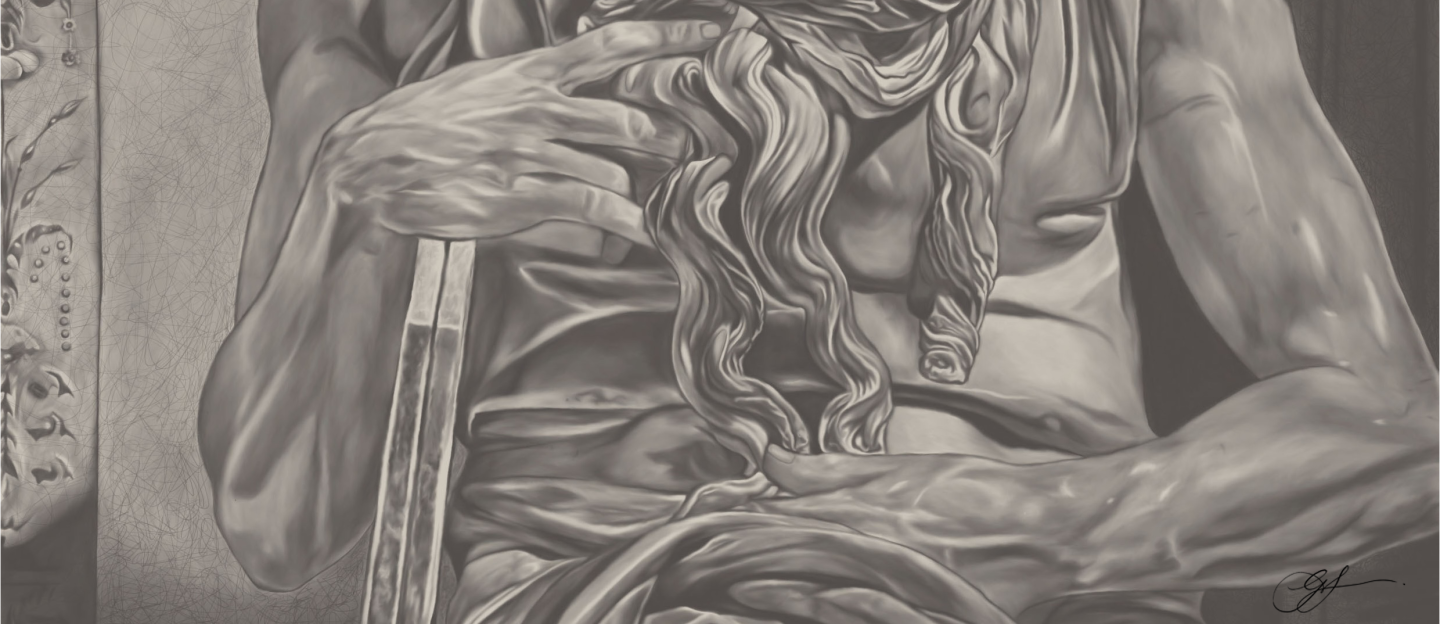
Hands convey strength held in check. The energy of the figure is palpable, as if Moses could rise from the throne at any moment.
Drawing Monumental Sculpture Up Close
Unlike sculptures intended for distant viewing, Moses demands close attention. Every angle offers new insight into Michelangelo’s translation of internal force into marble. My drawing isolates the body and expression, capturing the essence of Moses’ presence without needing to include the surrounding architectural elements.
It’s a study in authority, restraint, and contained energy, a human form conveying both divine purpose and mortal tension.
The Classical Statue Drawing Collection
This drawing is part of my ongoing exploration of classical sculptures, alongside The Ecstasy of Saint Teresa and The Rape of Proserpina. Each piece examines the body as a vessel for psychological, emotional, or spiritual intensity – from surrender to resistance, from contained tension to overwhelming presence.
High-quality prints of this drawing, and others in the collection, will be available soon.
