
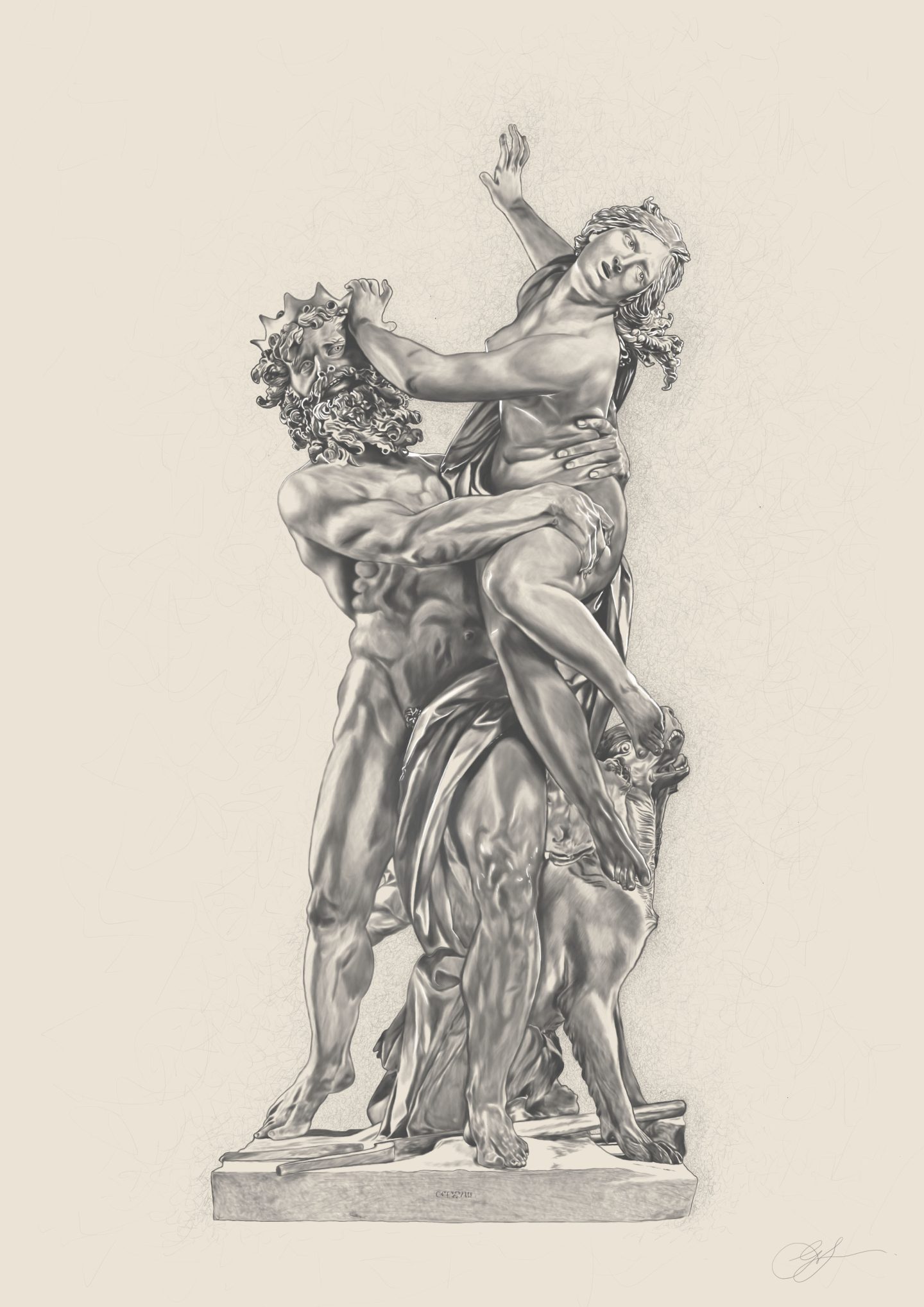
This drawing is based on Gian Lorenzo Bernini’s The Rape of Proserpina, one of the most powerful and emotionally confronting sculptures of the Baroque period. It is a classical statue I have returned to repeatedly, both as an artist and as a viewer, because it refuses to be passive or decorative.
I chose to draw this sculpture because of its uncompromising physical and emotional realism. It captures a moment of force and resistance with a level of clarity that still feels unsettling centuries later.
Studying Bernini’s The Rape of Proserpina
Bernini carved The Rape of Proserpina between 1621 and 1622, early in his career. Despite this, the sculpture shows extraordinary mastery of anatomy, movement, and emotional expression. Marble appears to behave like living flesh. Pluto’s fingers press into Proserpina’s thigh, creating the illusion of soft tissue yielding under pressure.
Proserpina’s body twists away from him. Her hands dig into his face. Her posture is not graceful or composed. It is strained, desperate, and active. She is not a passive figure in this scene. She is resisting with everything she has.
This physical tension is what guided my drawing. I was not interested in smoothing out the discomfort or making the image visually easy. The struggle is the subject.
The Myth of Proserpina and Its Meaning
The myth of Proserpina is often presented as an explanation for the changing seasons. After her abduction by Pluto, her mother Ceres searches for her in grief, allowing the earth to wither until a compromise is reached. But beneath the allegory, the story is about power, loss, and violation.
Bernini does not soften this narrative. The imbalance between the figures is visible in their bodies alone. Pluto is grounded and controlled. Proserpina is all movement and resistance. Even Cerberus at their feet reinforces the sense of entrapment.
When drawing this statue, I kept that context in mind, but I allowed the physical forms to lead. The body tells the story here before any mythological explanation does.
Close-Up Details
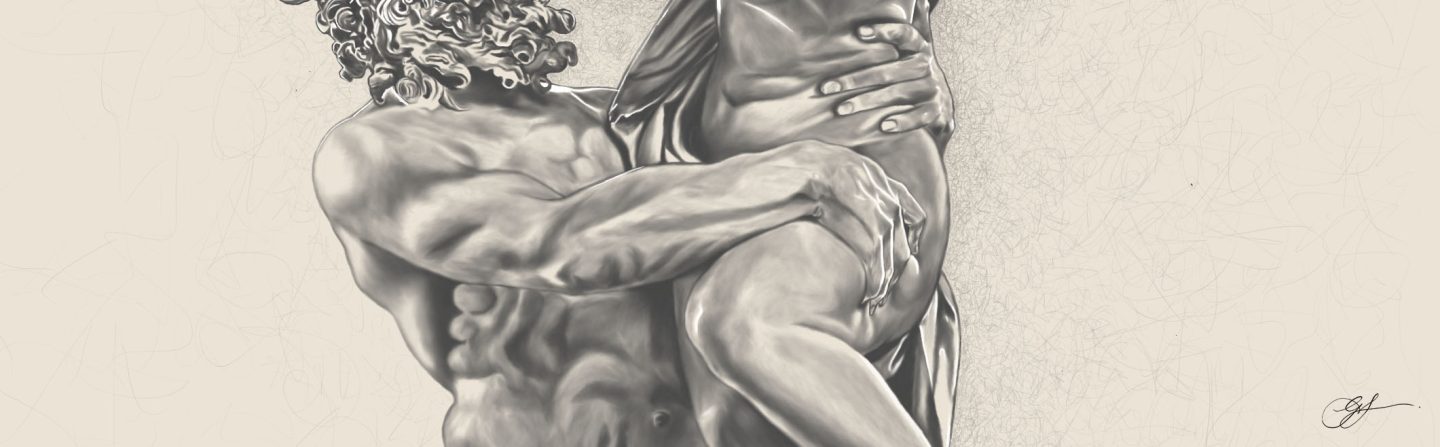
This detail is central to the sculpture and to my drawing. The compression of the form communicates force more clearly than any expression could. The twist through Proserpina’s torso carries much of the movement and resistance in the composition. It was one of the most challenging and important elements to resolve in the drawing.
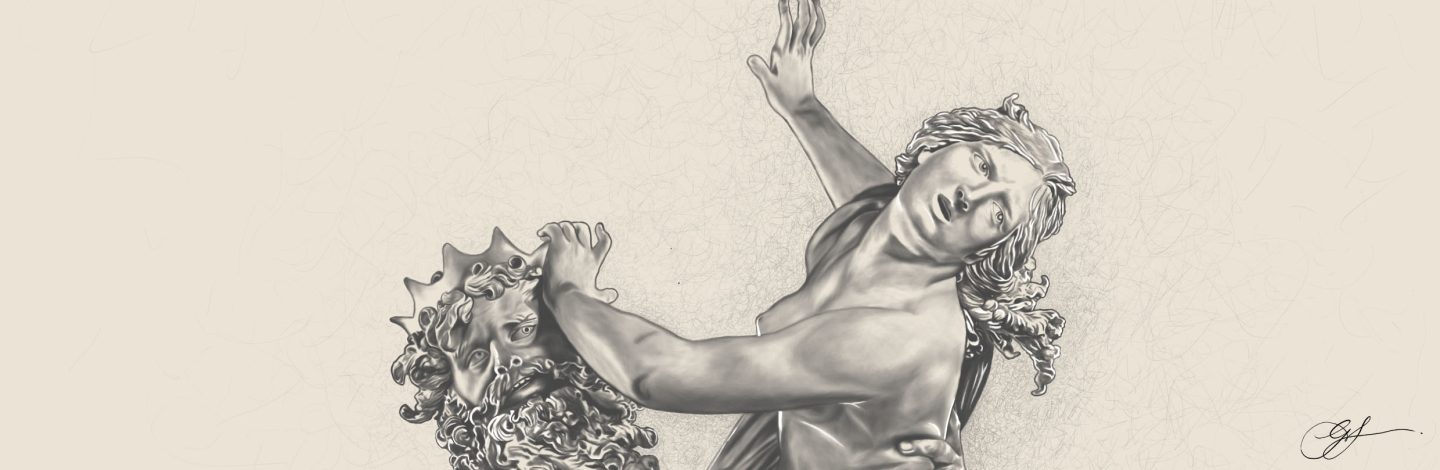
Her hands are tense, strained, and unrefined. Her expression is not theatrical. It is raw. Preserving that emotional honesty was essential.
Drawing Classical Sculpture
Drawing classical sculpture has become a core part of my practice. Working from statues forces a deeper understanding of anatomy, structure, and weight. There are no shortcuts. Every shadow describes form. Every line has consequence.
Many classical sculptures are admired for beauty alone, but the works that stay with me are the ones that carry psychological and emotional weight. The Rape of Proserpina is one of those pieces. It remains relevant because it does not look away from what it depicts.
Classical Statue Drawing Collection – Prints Coming Soon
This drawing is part of a wider collection of classical statues I have been working on. Each piece in the series is a detailed drawing of a sculpture that carries complex human narratives, not just aesthetic appeal.
The full statue drawing collection will be available soon as high-quality prints. When they are released, you will be able to find them in the shop. I will be sharing more drawings from the series as the collection continues to grow.
Some art is meant to be easy to look at. Some isn’t. This piece was never meant to be comfortable, and I didn’t want the drawing to be either. Sometimes the most important thing art can do is ask us to look, and not look away.
