
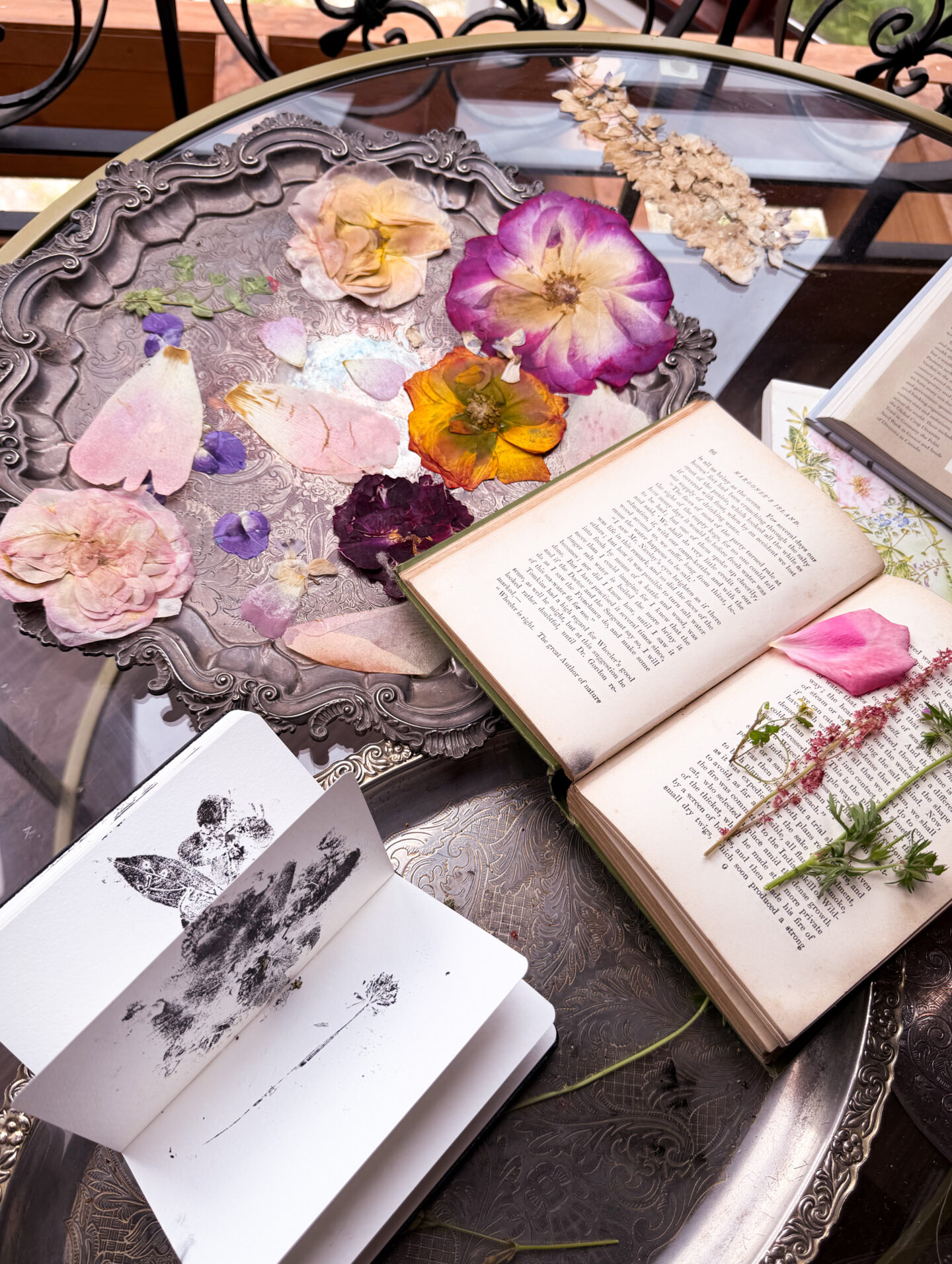
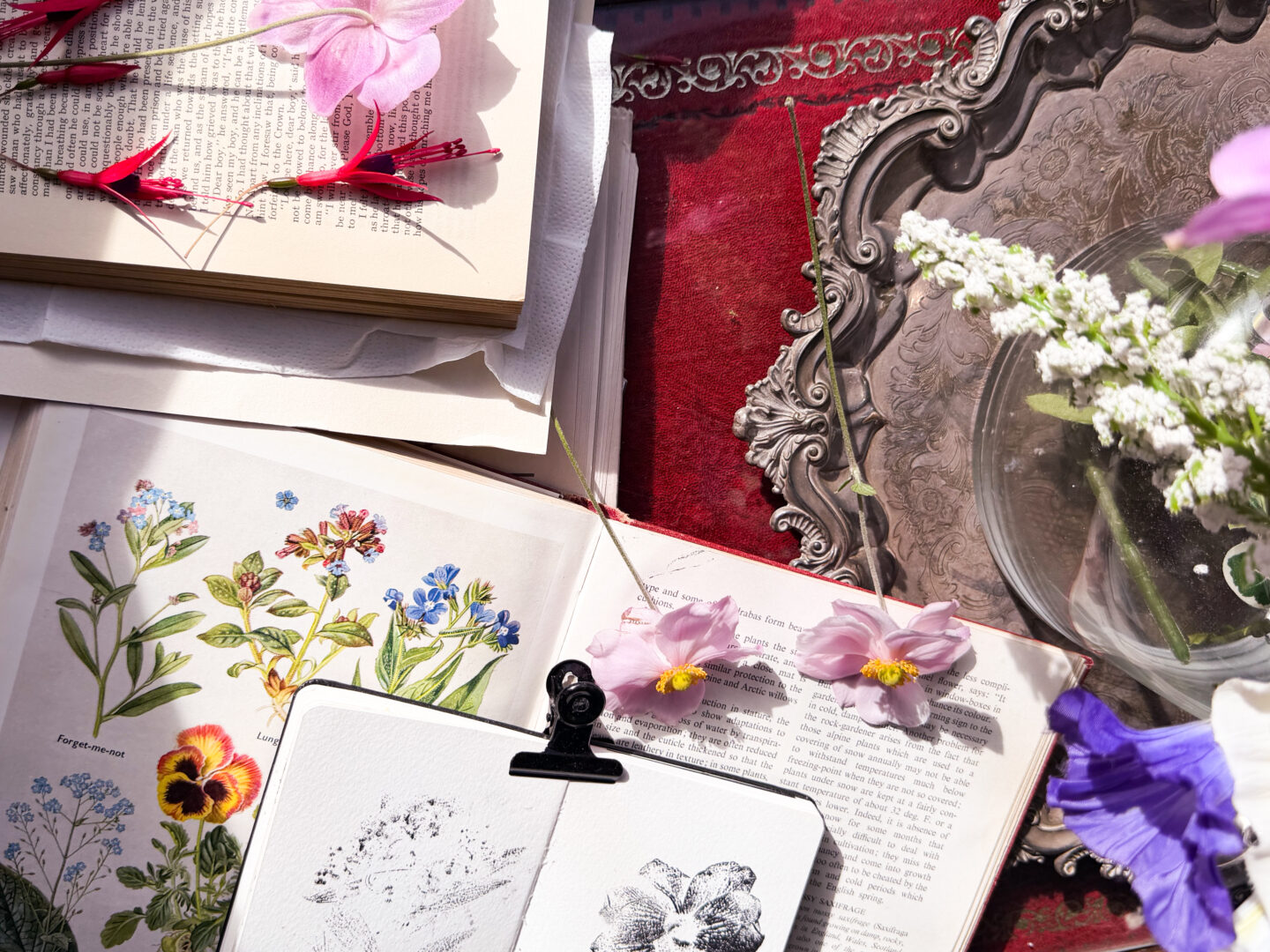
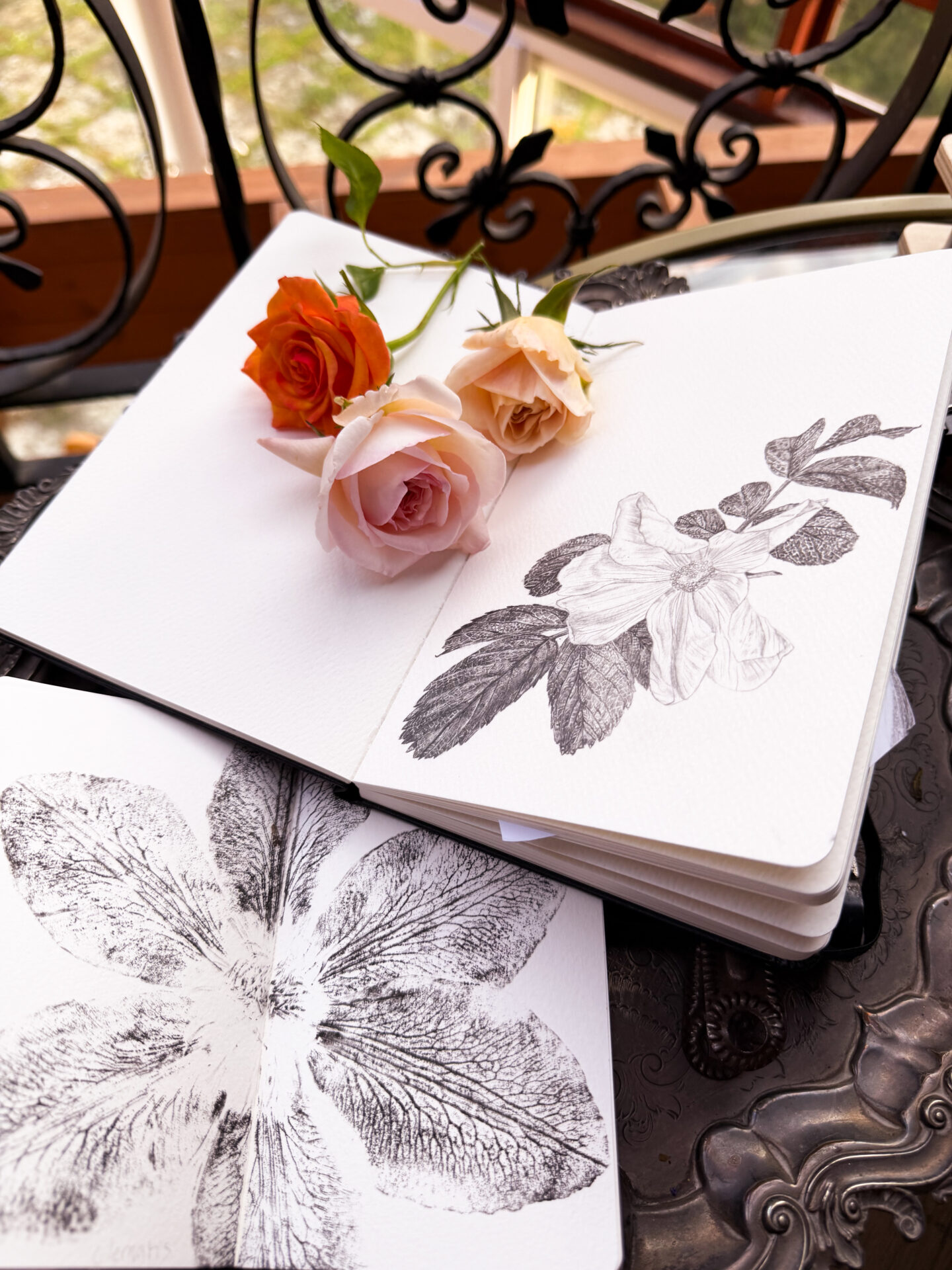
Summer did not arrive as a single season.
It accumulated.
By the time April gave way to May, the landscape had already begun producing more than the notebook could reasonably contain. What had started as an exercise in observation became something closer to continuous documentation. New growth appeared before the previous wave had been identified, flowers opened and faded between visits, and fruit began forming on trees whose blossom had only recently been recorded.
For a while, I attempted to keep pace.
Eventually, keeping track became a full-time occupation in itself.
The difficulty was no longer simply identifying what had appeared, but determining how much could be recorded without the archive becoming an endless inventory of things that were already changing before the ink had dried.
So, rather than divide the summer into a series of increasingly crowded monthly entries, I have allowed it to exist as a single collection.
Not everything has been identified. Not everything has been preserved. Some specimens remain little more than observations awaiting another season, and a couple of orchids are still unnamed. There is something appropriate about that incompleteness. An archive can document the limits of its own attention as readily as it documents the natural world.
Summer, it seems, was determined to test those limits.
Roses (Rosa spp.)
The roses arrived in variations of colour, form and habit, from cultivated varieties to the less restrained growth of dog roses and wild roses. Among them was the Canary Bird rose, my grandfather’s favourite. Some plants belong to the landscape; others belong to the people through whom we remember it. This one manages to do both.
Larkspur (Consolida spp.)
Tall, delicate spires carrying their flowers upwards, giving the borders a verticality that earlier spring growth had not yet possessed.
Foxglove (Digitalis purpurea)
Architectural and unmistakable. Their tubular flowers arranged along tall stems, lending woodland edges and shaded ground a sense of scale.
Snapdragons (Antirrhinum majus)
Familiar cultivated flowers with an almost theatrical structure, each bloom arranged along its stem as though the plant had been designed for a miniature stage.
Clematis (Clematis spp.)
Climbing, winding and flowering through structures that would otherwise remain unremarkable. Their growth makes it difficult to separate the plant from the space it occupies.
Japanese anemone (Anemone hupehensis)
Later-season flowers held above comparatively understated foliage, arriving as the character of the garden begins to change again.
Hibiscus (Hibiscus spp.)
Large, expressive blooms whose scale makes them difficult to overlook among smaller summer flowers.
Fuchsia (Fuchsia spp.)
Known to my grandparents as Mrs Popple. The name has remained with me, an example of how the language of a garden is often inherited alongside the plants themselves.
Orpine (Hylotelephium telephium)
A sturdy perennial with fleshy foliage and dense clusters of small flowers, carrying something of the season’s later, more substantial growth.
Evening primrose (Oenothera spp.)
Flowers that bring a different quality to the summer landscape, their presence associated with the quieter transition between daylight and evening.
Butterfly bush (Buddleja davidii)
Long, fragrant flower clusters attracting movement as well as colour. A plant whose presence is measured partly by what gathers around it.
Hollyhock (Alcea rosea)
Tall flowering stems rising above the surrounding growth, their blooms arranged almost like a record of the season climbing upwards.
Mallow (Malva spp.)
Open, delicate flowers that can easily disappear into the larger abundance of summer until attention returns to the smaller details.
Japanese meadowsweet (Filipendula japonica)
Soft, clustered flowers held above divided foliage, bringing a lighter texture to the increasingly dense summer growth.
Yellow loosestrife (Lysimachia vulgaris)
Yellow flowers appearing in loose clusters, bright against the deeper greens that now dominate the landscape.
Dianthus
Planted by my daughter at gardening club several years ago. Its inclusion in this year’s archive makes the notebook something more than a record of seasonal change. It also holds traces of earlier moments, growing quietly alongside the plants themselves.
Florist’s daisy — identification pending
A large, daisy-like flower whose exact identity remains uncertain. For now, it stays in the notebook under a provisional description, a reminder that observation and identification are not always simultaneous.
Lavender (Lavandula spp.)
Fragrance as much as appearance. Even before the flowers are examined closely, lavender announces itself through the air around it.
Eggs-and-bacon (Lotus corniculatus)
A small wildflower with a familiar common name, its yellow and orange flowers easily overlooked among taller summer growth.
Pink jasmine (Jasminum polyanthum)
Climbing growth and fragrant flowers, adding another layer to the season’s mixture of cultivated plants and more naturalised forms.
Toadflax (Linaria spp.)
Slender stems carrying small, intricate flowers that reward closer attention than their size initially seems to justify.
Yellow iris (Iris pseudacorus)
A striking flower associated with damp ground and water margins, its upright form distinct from the looser growth surrounding it.
Stinking iris (Iris foetidissima)
A less immediately showy plant whose interest extends beyond its flowers, particularly as its later-season features begin to develop.
Sweet peas (Lathyrus odoratus)
Climbing stems and delicate flowers, bringing fragrance and a softness of form to the summer collection.
Peonies (Paeonia spp.)
Large, layered flowers that seem almost excessive in their abundance of petals, their brief period of flowering making them particularly worth recording.
Snowberry (Symphoricarpos albus)
A plant whose seasonal interest extends beyond flowering into the pale fruits that give it its name. Another reminder that the botanical archive cannot end with the blossom.
Mock orange (Philadelphus spp.)
Two forms observed, one of which may be a wild or less cultivated type. Their relationship remains to be established, but the distinction is worth retaining until identification is more certain.
Bindweed (Convolvulus spp.)
Climbing and spreading through whatever structure is available. A reminder that the plants most often regarded as interruptions to a garden are still part of its botanical life.
A selection of orchids – identification pending
Two specimens remain to be identified. For now, they occupy an unfinished part of the archive, awaiting the names that will allow them to be placed more precisely within it.
Beyond the Flowers
The summer record was never entirely floral.
The cherries began to develop fruit. damsons followed, alongside blackberries and apples. The landscape shifted from the brief spectacle of blossom towards something heavier and more tangible: the beginnings of a harvest.
It was striking to watch the same plants pass through such different states within a relatively short period. A tree that had been documented for its flowers became a tree carrying fruit; a flower that had briefly dominated a branch disappeared into the background of the plant’s continuing growth.
The archive had to change with it.
And then, among all the flowers, foliage and developing fruit, there was a grass snake. Entirely outside the intended scope of the notebook, and perhaps therefore one of the more memorable observations. A reminder that the landscape does not organise itself around the categories through which we attempt to understand it. The botanical archive occasionally acquires evidence of everything else.
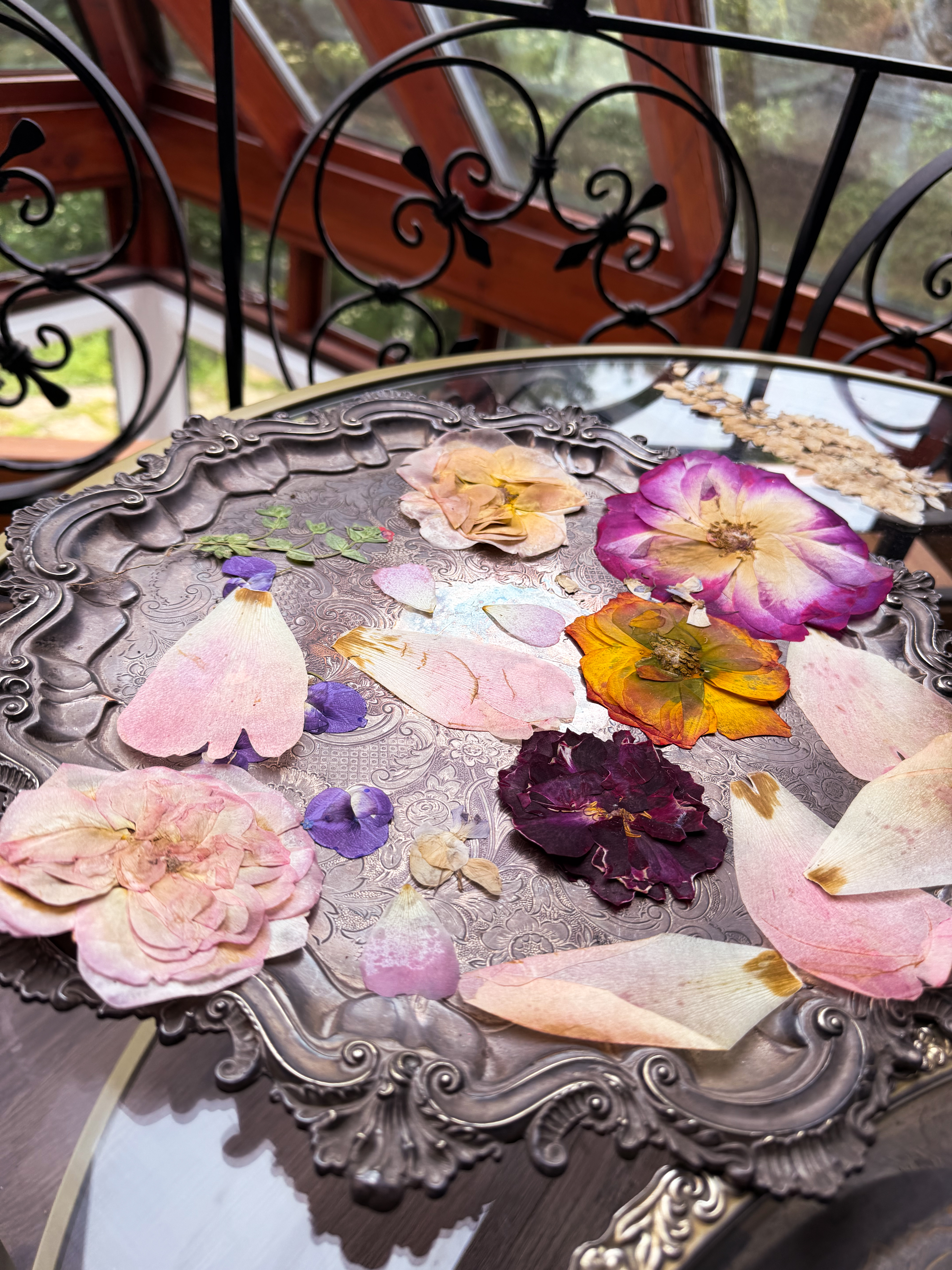
October — The Return
By October, the pace has begun to change again.
The abundance of summer is giving way to the slower business of autumn and the approach of winter. Growth is becoming less conspicuous, flowers are fewer, and the landscape is gradually returning to the spaces between things.
Yet the year has not finished producing surprises.
I have begun to notice bulbs pushing upwards again, their emergence strangely out of step with the season as I would ordinarily expect it. In town, there is a magnolia in flower — something I have never witnessed there before at this time of year.
It is tempting to attribute such anomalies to El Niño or the wider instability of our changing climate, but a single observation cannot establish the cause. What it can do is make the familiar pattern of the seasons feel less certain.
And that uncertainty has become part of the project.
Watching the same trees and plants move through their full cycle has been one of the most unexpected aspects of documenting the year so closely. Bud, flower, fruit, decline. The sequence is familiar in principle, but observing it repeatedly, sometimes within the same small area of ground, gives it a different weight.
Nothing simply disappears.
Flowers become fruit. Fruit falls. Leaves change and drop. What appears to be an ending is often only the beginning of a less visible stage, one that will continue long after the surface of the landscape has become quiet.
The notebook has grown considerably since January, but it has not made the natural world more manageable. If anything, the closer I have looked, the more there is to account for.
I began the year wondering what would emerge.
By spring, the problem was abundance.
Summer made abundance impossible to contain.
Now, as winter approaches, I find myself looking at what remains, what has returned unexpectedly, and what is already preparing to emerge again.
The archive cannot hold everything. It was never going to.
Perhaps its purpose is not to preserve an entire year in its entirety, but to make visible the extent to which a year can change while we are looking at it.
Scarcity created focus.
Abundance created pressure.
The return has created a different kind of attention.
Follow along here: A Year in Ink – A Botanical Archive.
Follow along with the project as the year continues.
