
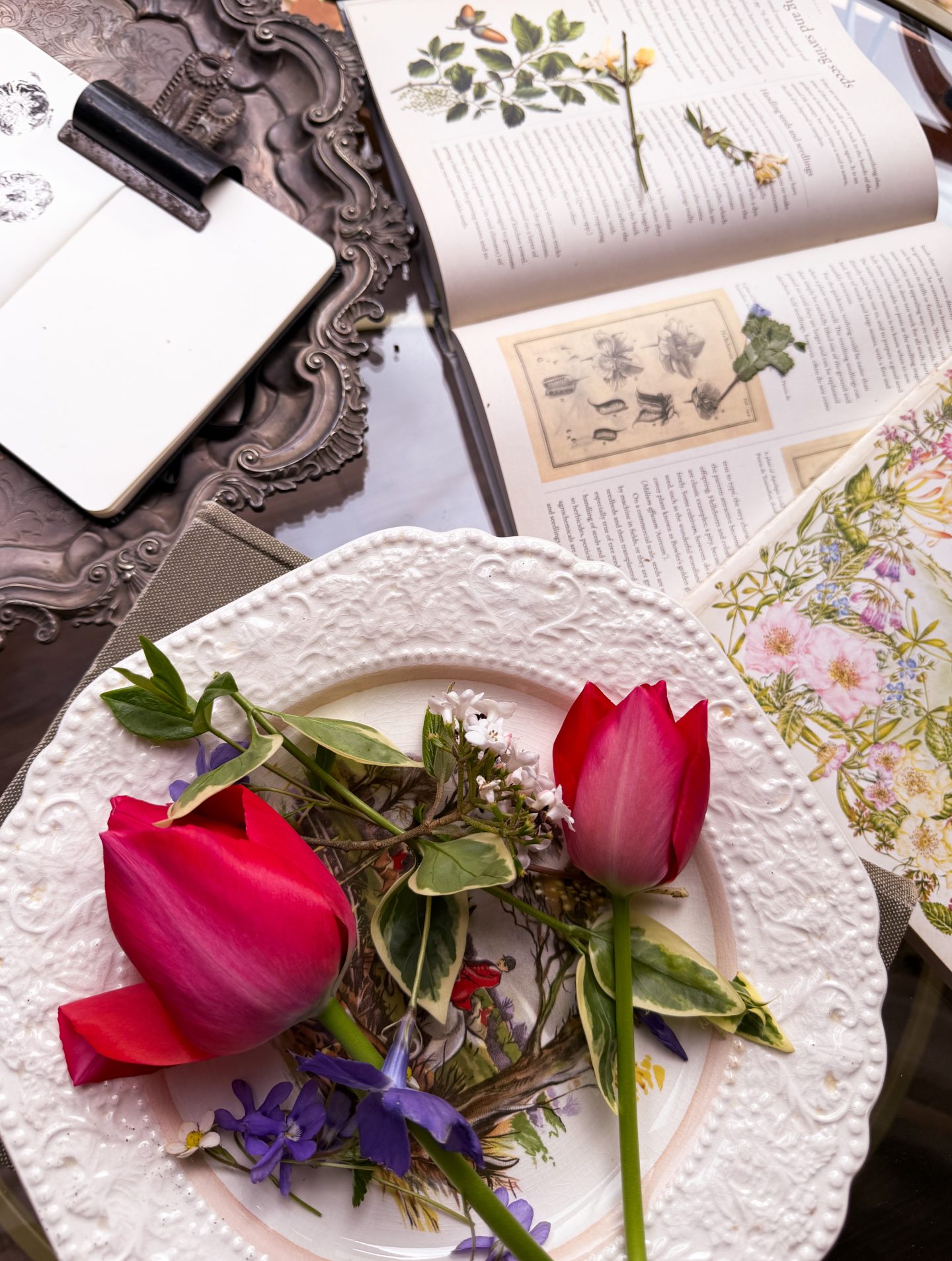
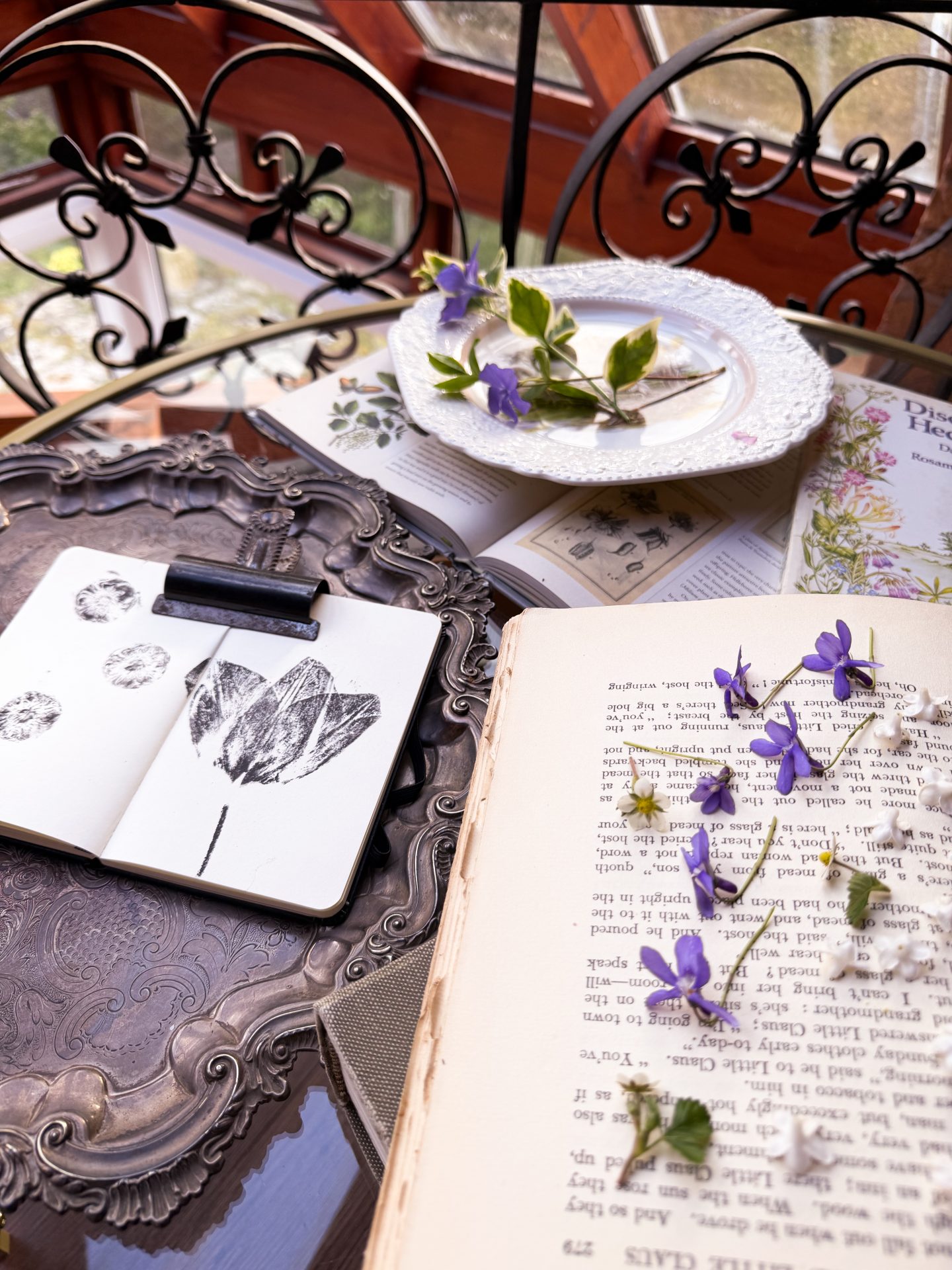
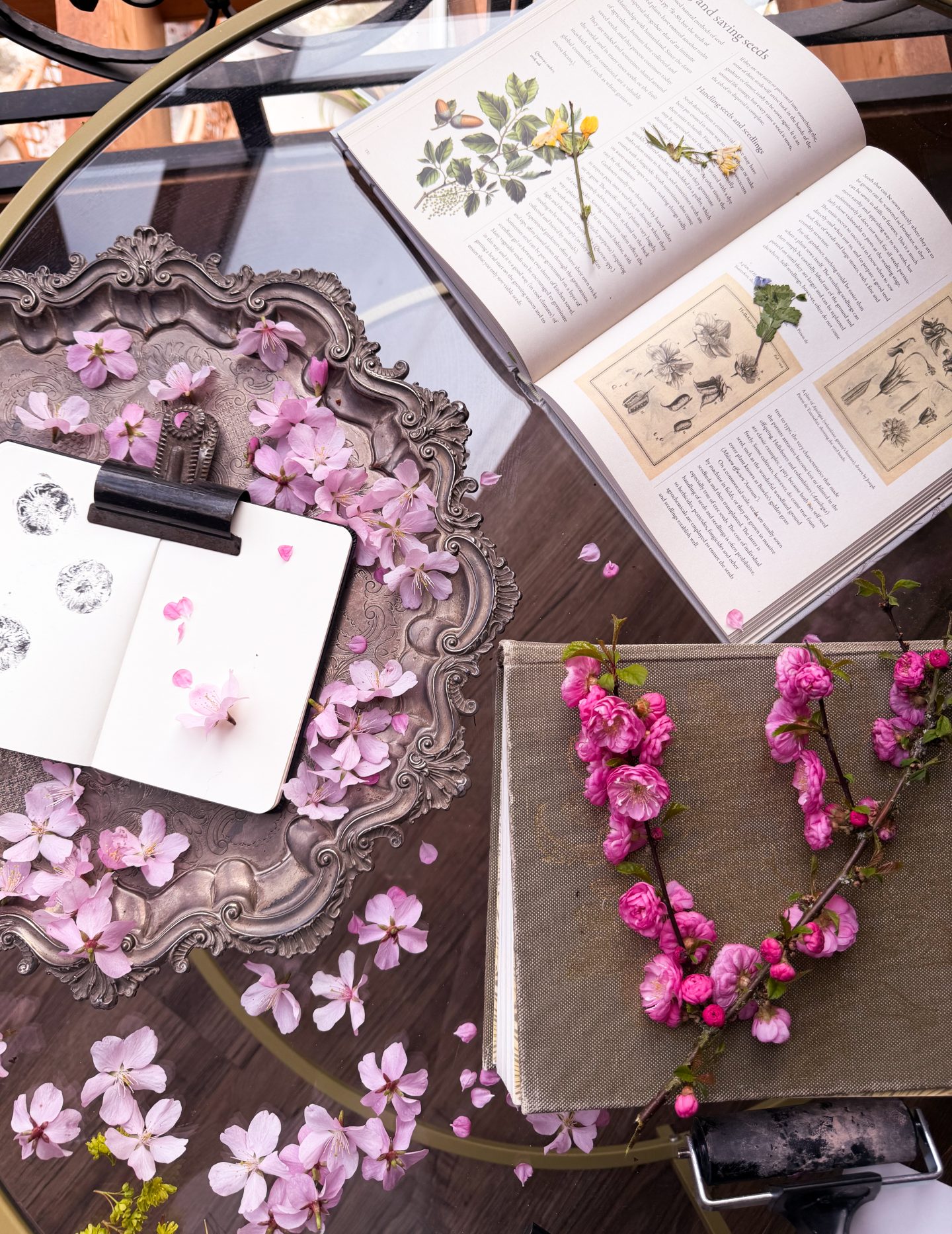
March does not negotiate.
February felt like a surge – sudden, crowded, demanding attention – but March is something else entirely. It is not an increase; it is a release. What was building beneath the surface is now fully expressed. There is no restraint left in it.
Where January asked for patience and February required control, March removes both. The pace is no longer manageable in the same way. You are not selecting specimens so much as trying to keep up with them.
Flowers Collected
Speedwell (Veronica persica) – lilac-toned and low, but vivid enough to pull the eye downward. Easy to miss at a glance, impossible to ignore once seen.
Narcissus (Narcissus spp.) – the smaller, miniature form. Less imposing than February’s daffodils but more refined. Precise, contained, deliberate.
Cowslip (Primula veris) – soft yellow, but stronger than it appears. It holds its ground rather than blending into it.
Grape hyacinth (Muscari armeniacum) – planted three years ago, now returned. Dense clusters, saturated colour. Not just a specimen, but a marker of time. A reminder that something continues whether observed or not.
Purple rock cress (Aubrieta deltoidea) – ground-hugging, spreading, unapologetically bright. It fills space quickly, decisively.
Blackthorn (Prunus spinosa) – stark and early. Blossom against bare, dark wood. There is something almost severe about it. No softness, just contrast.
Forsythia (Forsythia × intermedia) – loud in its yellow. No subtlety. It arrives and dominates.
Wild violet (Viola odorata) – smaller, quieter, but intricate. The kind of flower that requires you to stop and actually look.
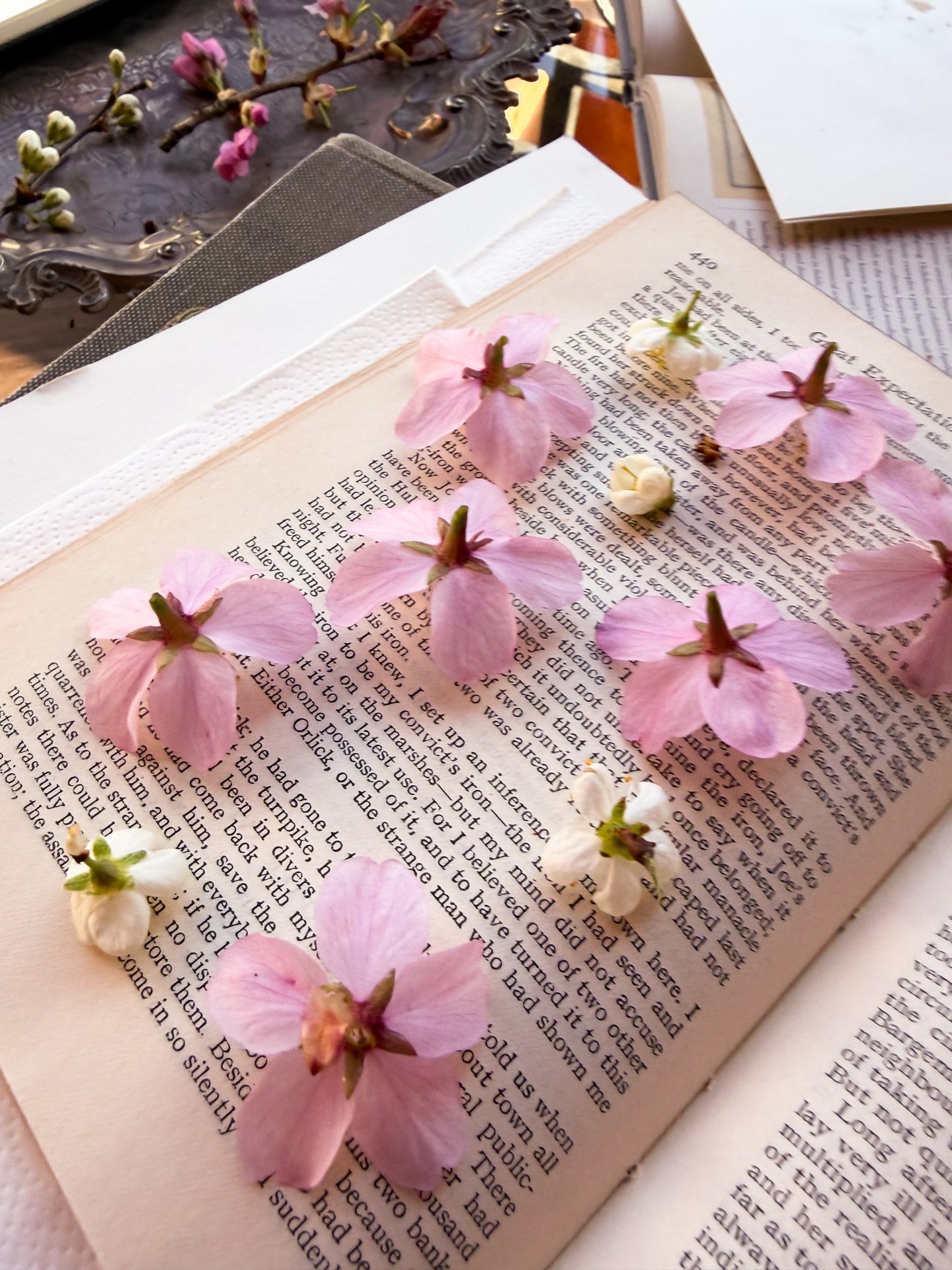
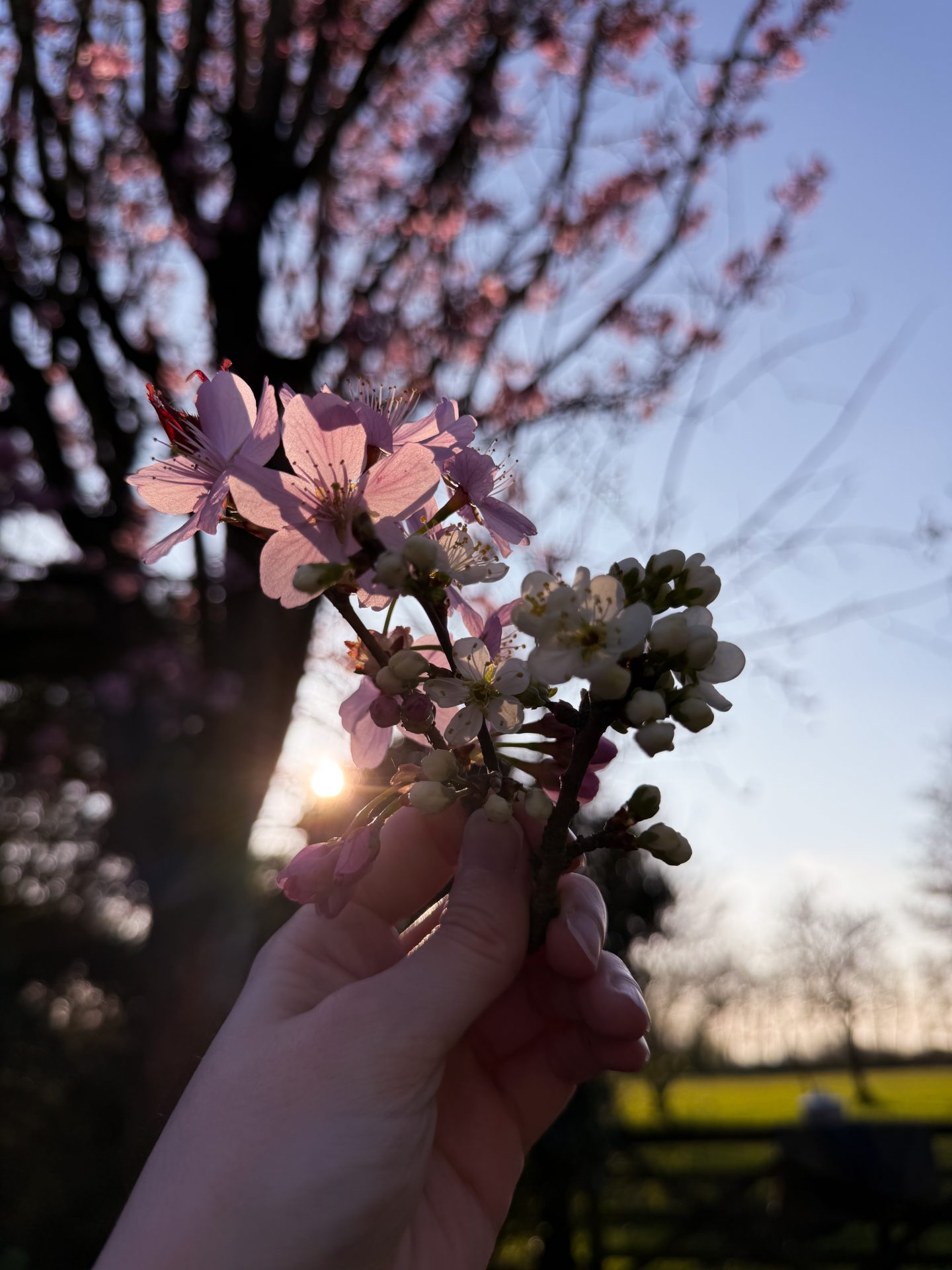
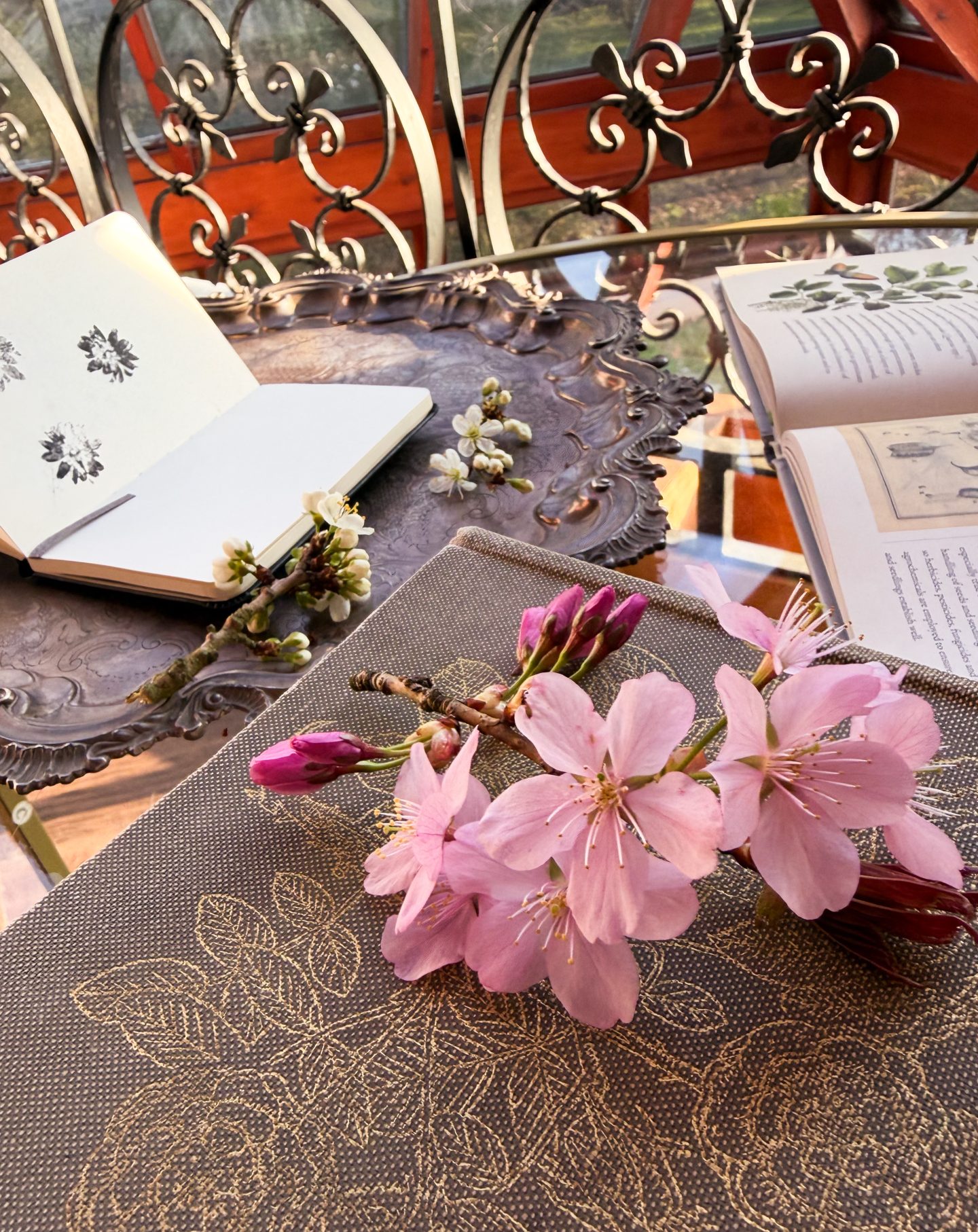
Sargent cherry (Prunus sargentii) – the focal point. This is not just another entry. The blossom carries weight, anticipation, familiarity. It does not feel seasonal – it feels personal.
European plum (Prunus domestica) – softer blossom, less dramatic, but consistent. Reliable.
Damson (Prunus domestica subsp. insititia) – similar, but sharper in structure. Slightly more restrained.
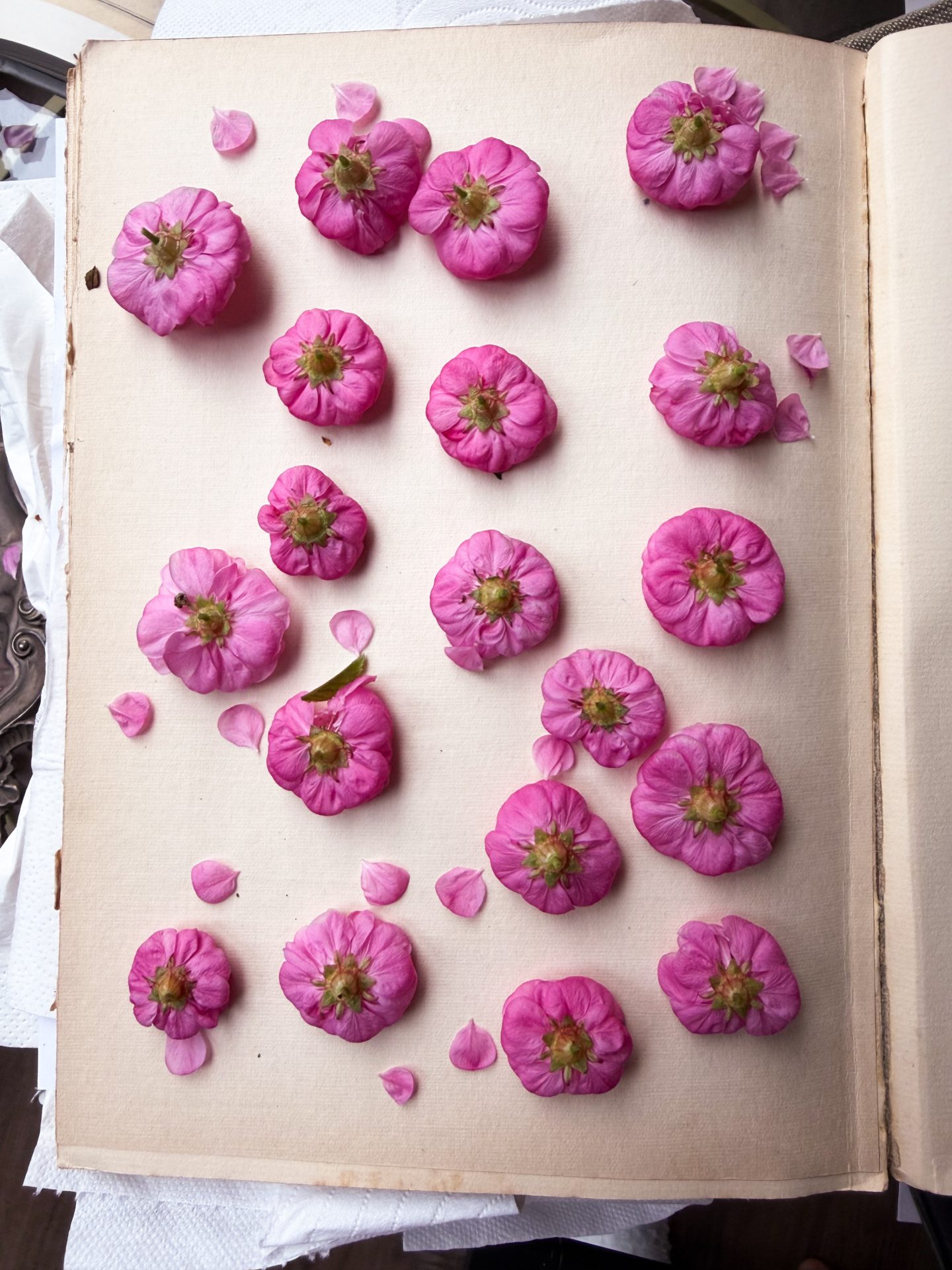
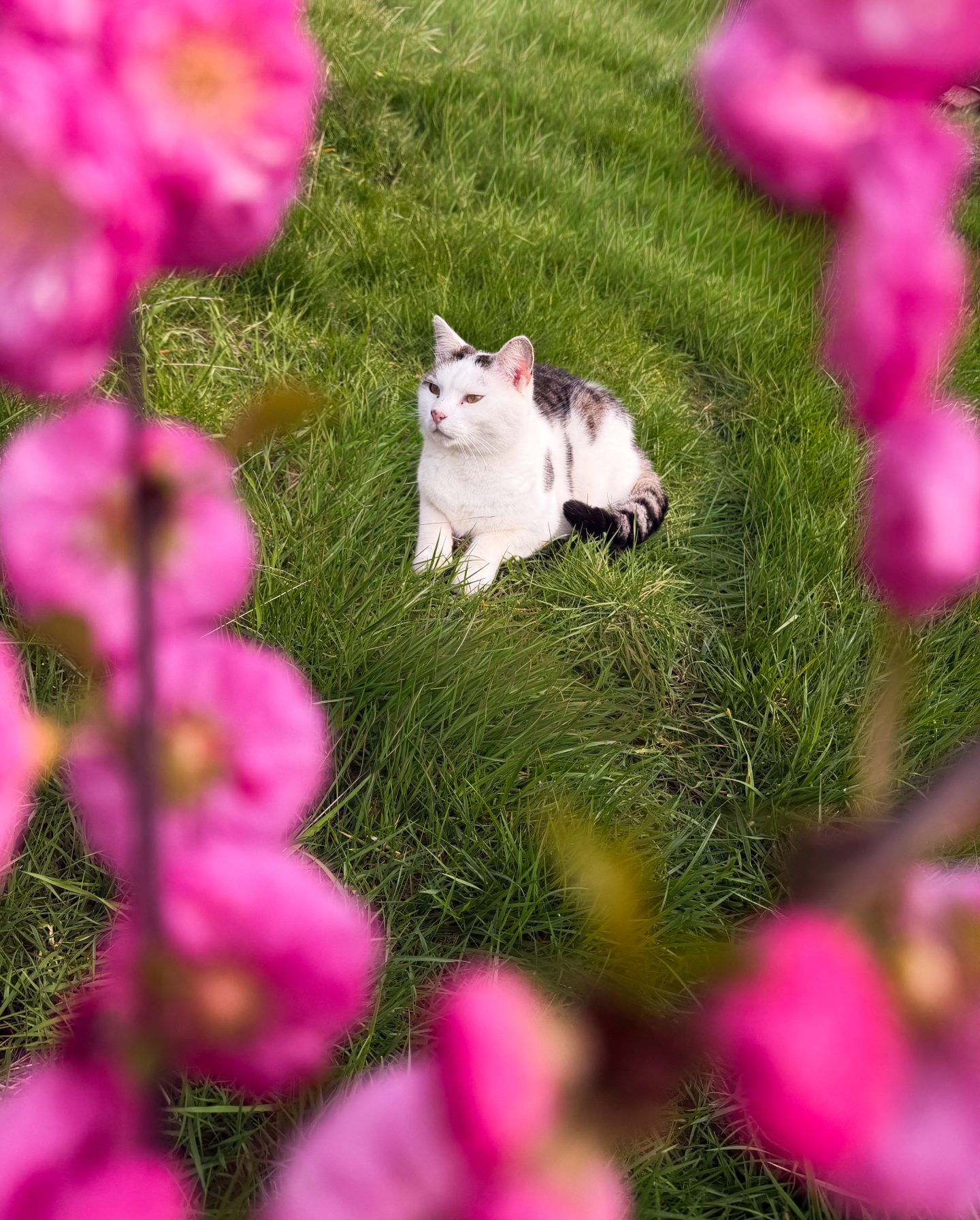
Flowering almond (Prunus triloba) – bright pink, almost excessive in colour. It does not hold back.
Rosebud (spring) cherry (Prunus serrulata) – variation within a single tree. White to pink across the same branches. Instability in colour, but not in presence.
Tulip (Tulipa spp.) – controlled form. Clean lines. Almost architectural compared to everything else unfolding around it.
Lesser periwinkle (Vinca minor) – trailing, steady, returning again but now competing within a much louder landscape.
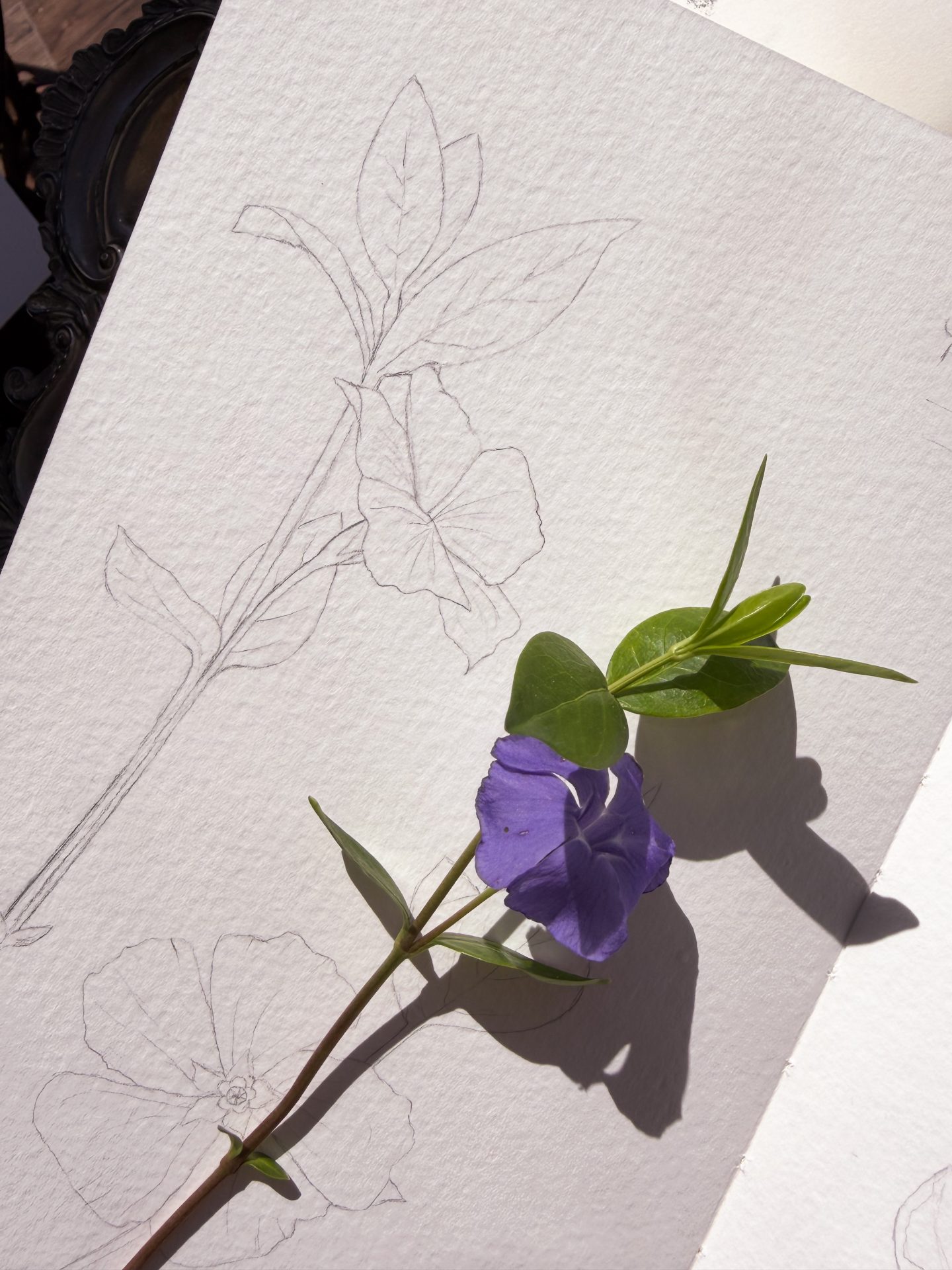
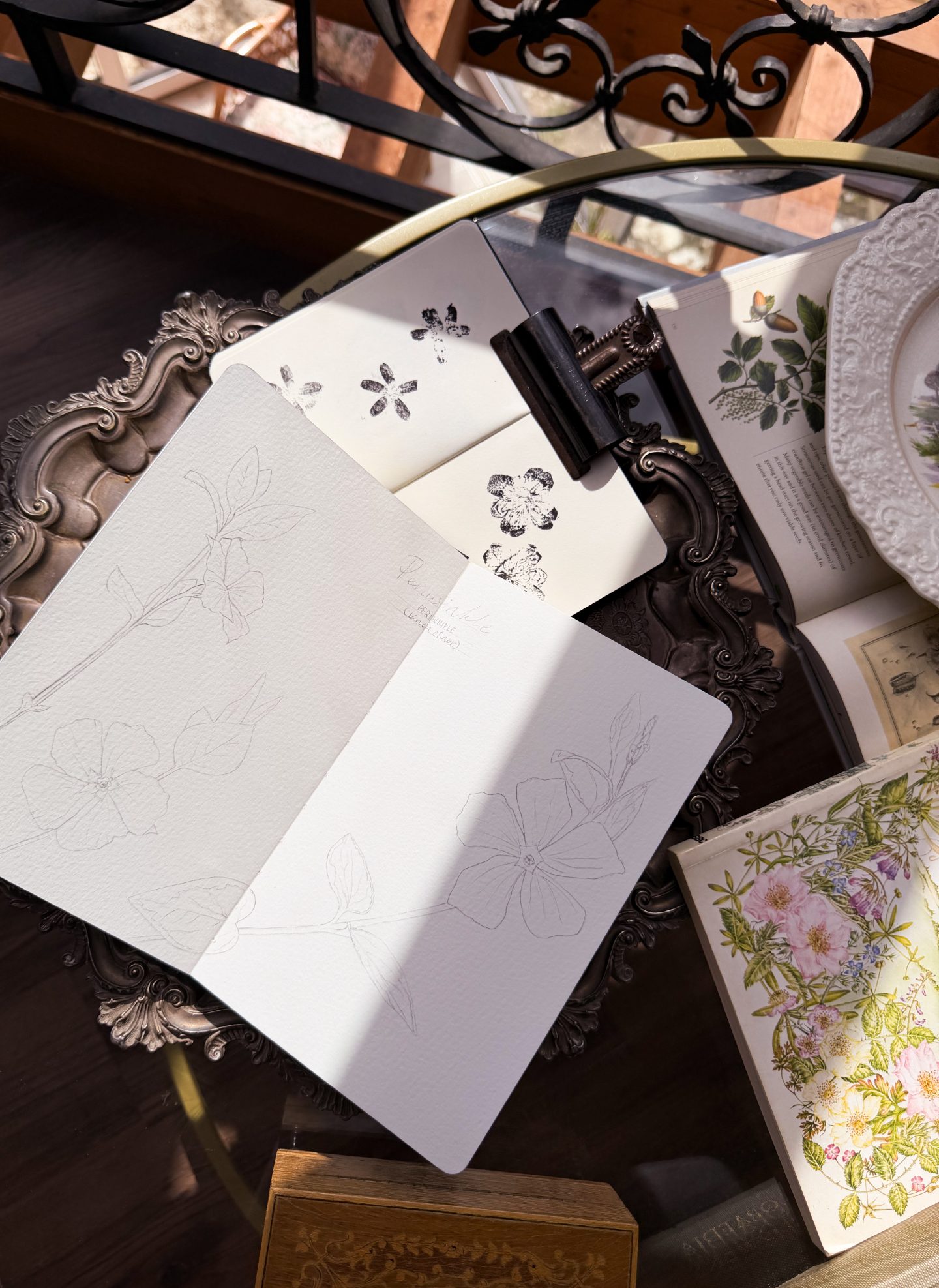
This month is no longer about careful placement.
The notebook begins to fail here – not physically, but conceptually. The constraint that once created focus now risks omission. There is more than can be held, more than can be recorded with the same level of control.
Pressing becomes faster. Decisions become less about perfection and more about inclusion. What gets documented is no longer just what is most striking, but what can be captured before it is gone.
Ink continues to record honestly, but the process around it shifts. The move from block ink to ink pads reflects that. Efficiency matters now. Detail still matters – but so does pace.
March forces a different kind of attention. Not slower, not deeper – just sharper. More immediate.
January was scarcity.
February was management.
March is saturation.
And the risk now is not missing what is there –
it is failing to hold onto it long enough to see it properly.
Follow along with this project here – A Year in Ink – A Botanical Archive.