
April Does Not Pause
April does not arrive carefully.
March already pushed the land beyond restraint, but April removes any illusion of order entirely. Blossom overtakes branch. Ground cover thickens by the day. Trees that stood skeletal weeks earlier are now layered in colour, movement, and scent.
There is no single focal point anymore.
Everything blooms at once.
Where January felt sparse and February still allowed space between specimens, April collapses that distance completely. The archive becomes accumulation rather than selection. Walks take longer now, not because the land is larger, but because every few steps demand interruption.
The pace changes again here.
Not urgency exactly. Saturation.
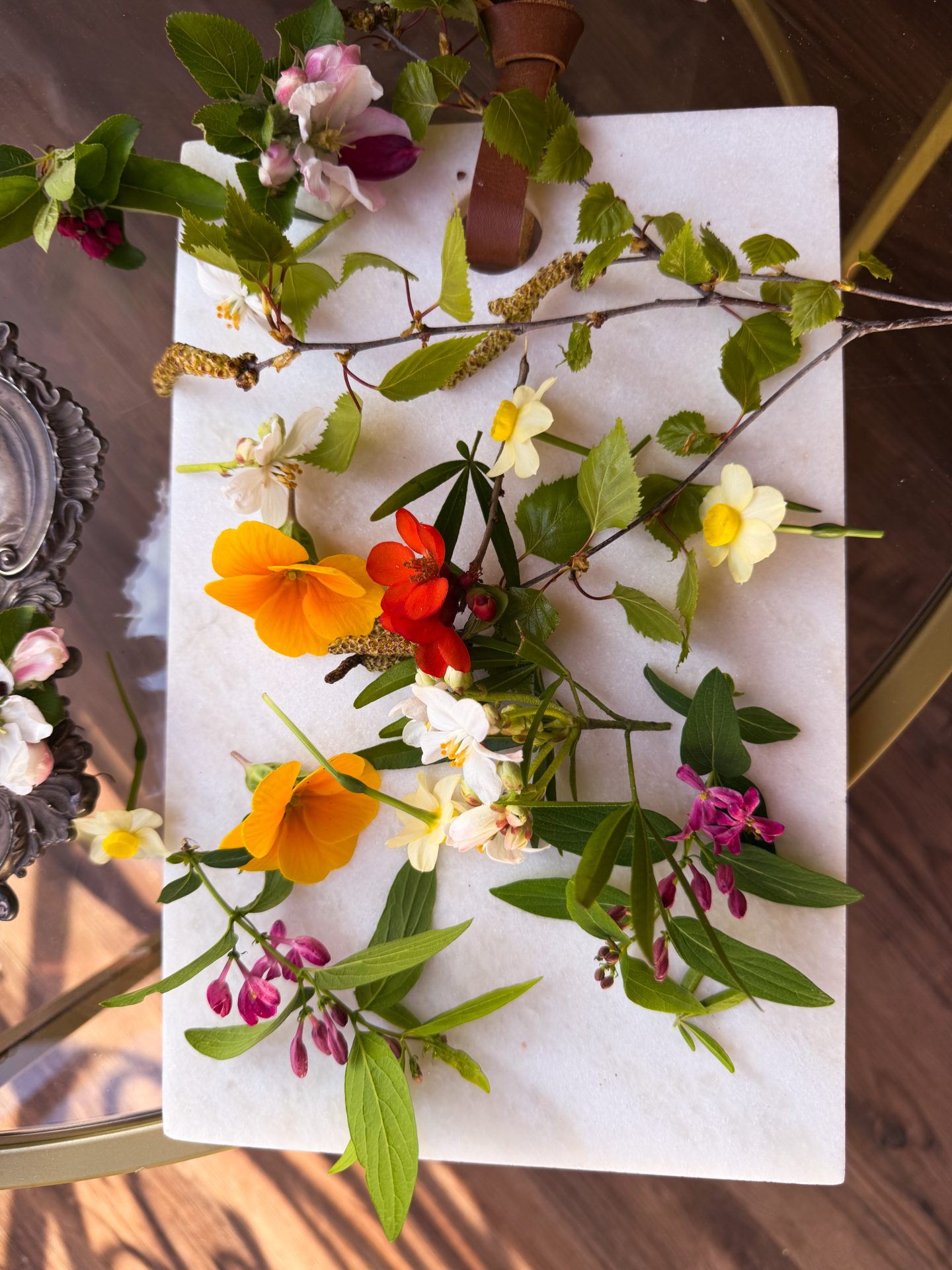
Flowers Collected
Juneberry (Amelanchier lamarckii)
Fine white blossom suspended lightly against dark branch structure. Delicate at first glance, but capable of transforming an entire tree canopy within days.
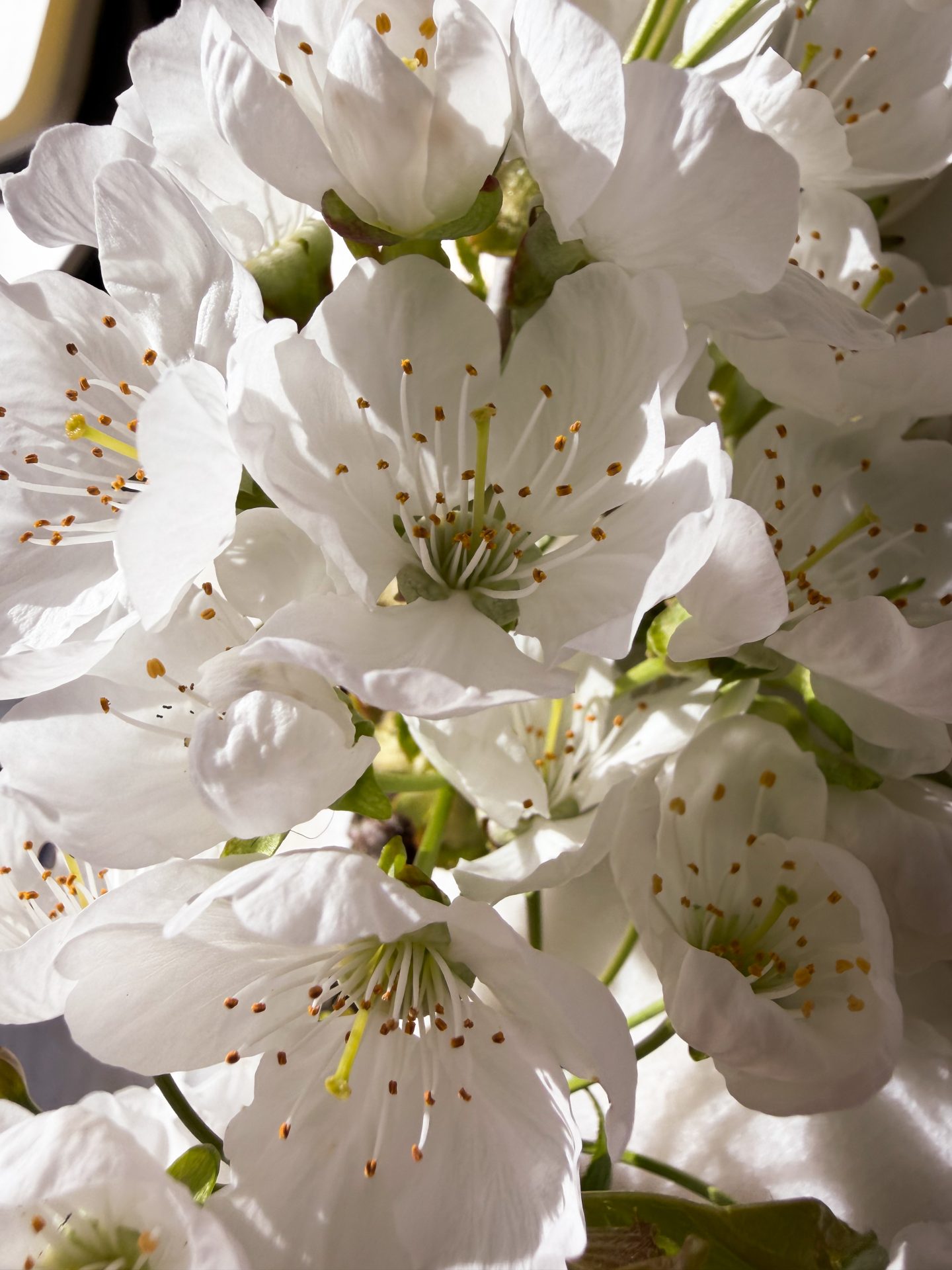
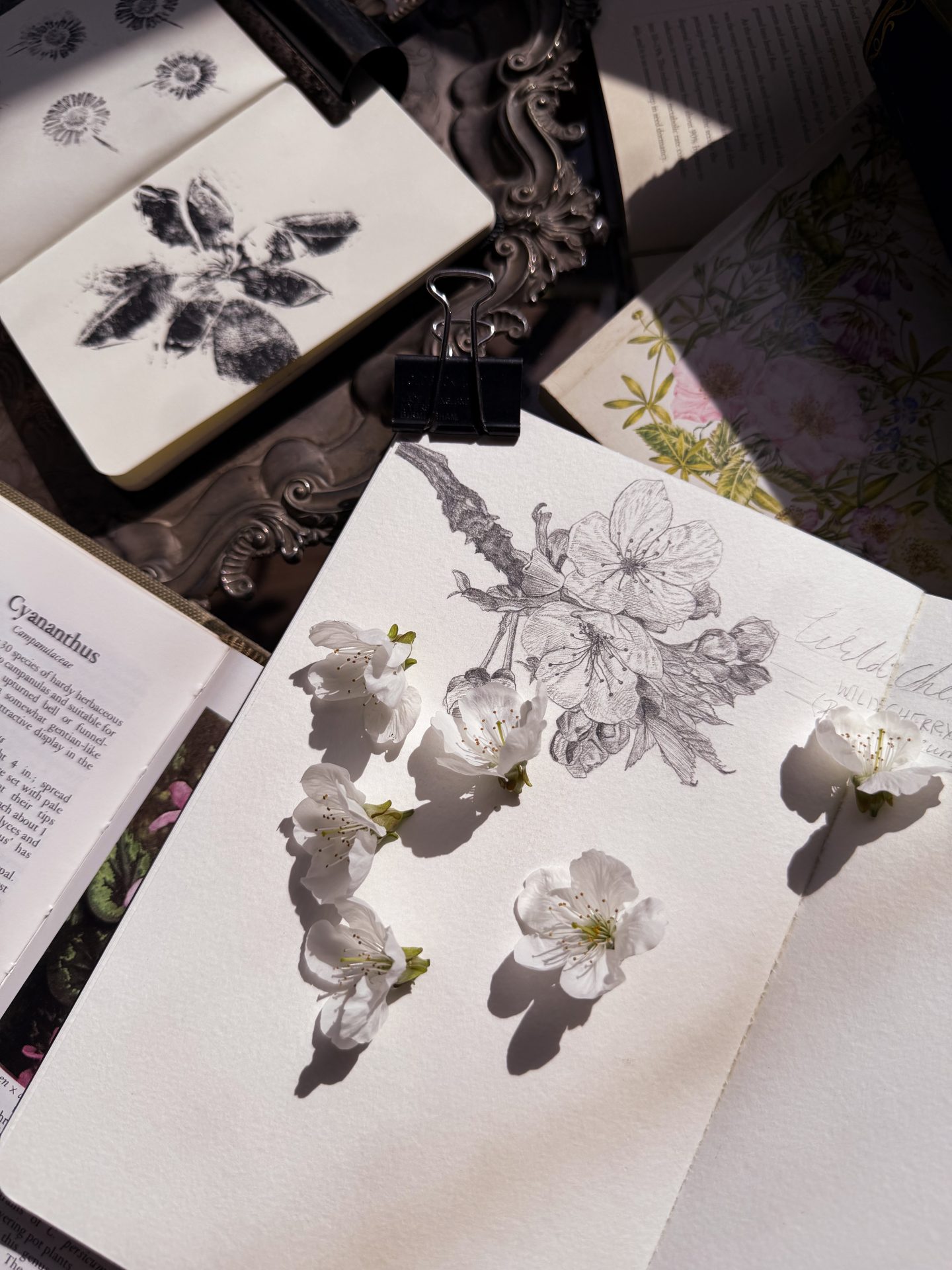
European cherry (Prunus avium)
More restrained than ornamental cherry varieties. Softer blossom, less theatrical, but rooted in the landscape in a way cultivated forms are not.
Persian speedwell (Veronica persica)
Still threading through the lower ground. Small enough to overlook entirely unless attention has already been trained downward.
Horse chestnut (Aesculus hippocastanum)
Not yet fully in flower, but unfolding rapidly. The leaves themselves feel architectural before the blooms even appear.
Goat willow (Salix caprea)
Silver-toned catkins shifting toward softness and age. Less striking now than earlier in the season, but still part of the transition.
Silver pear (Pyrus salicifolia)
Muted foliage beneath clean white blossom. Quietly elegant without demanding focus.
Conference pear (Pyrus communis ‘Conference’)
Functional, cultivated, familiar. Blossom that exists as both ornament and future harvest.
Daisy (Bellis perennis)
Persistent rather than dramatic. Present almost everywhere once the ground fully wakes.
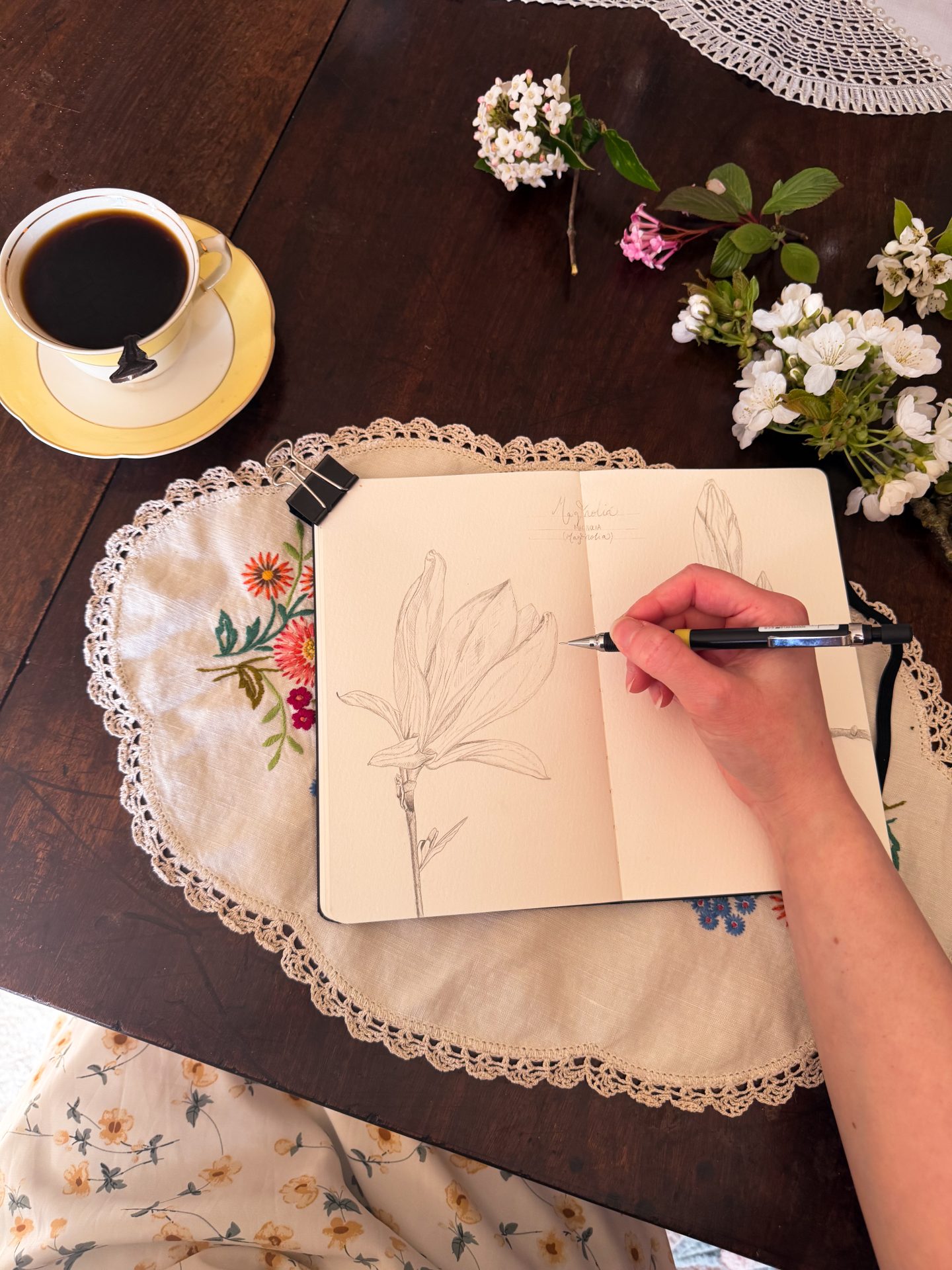
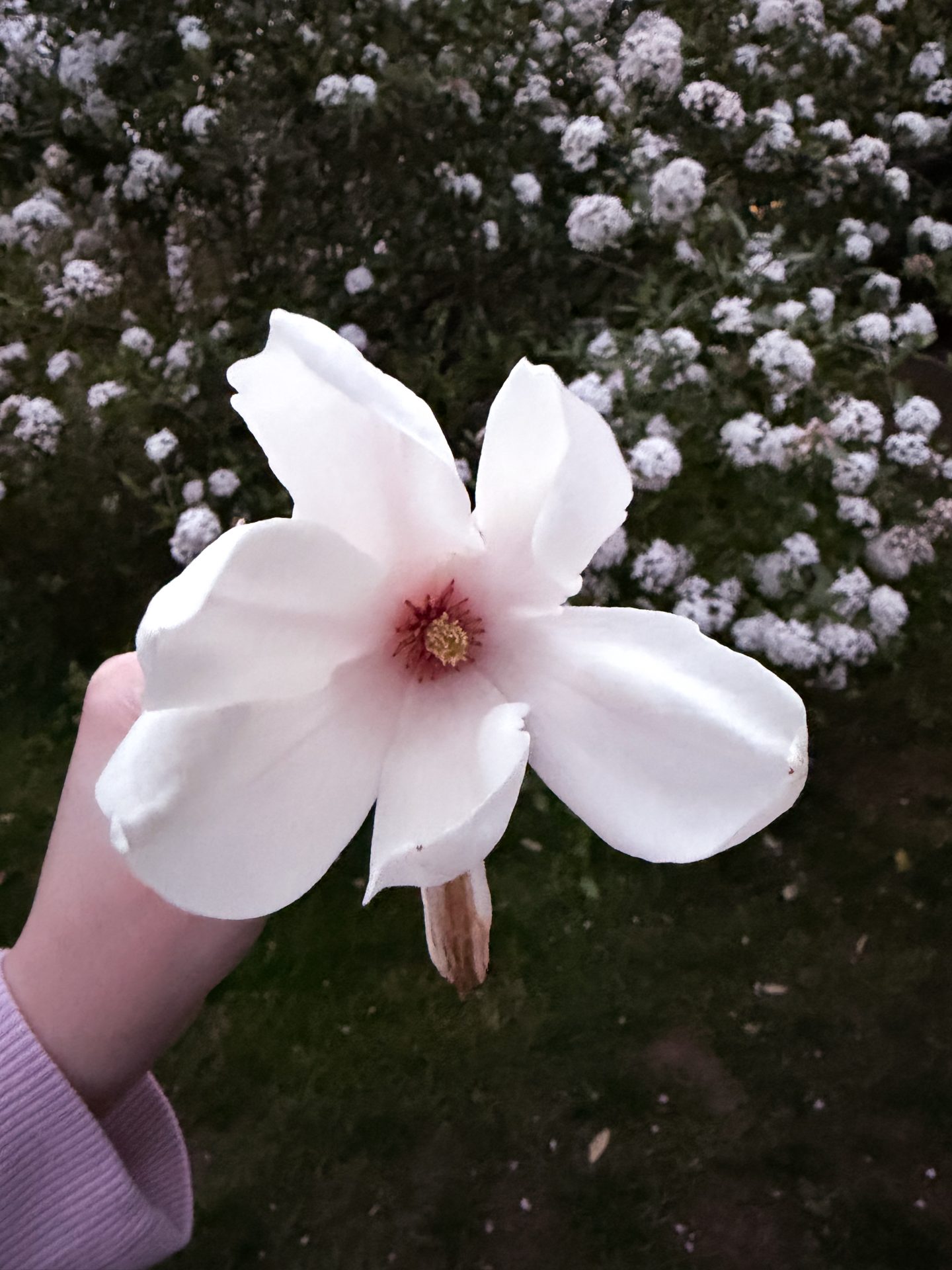
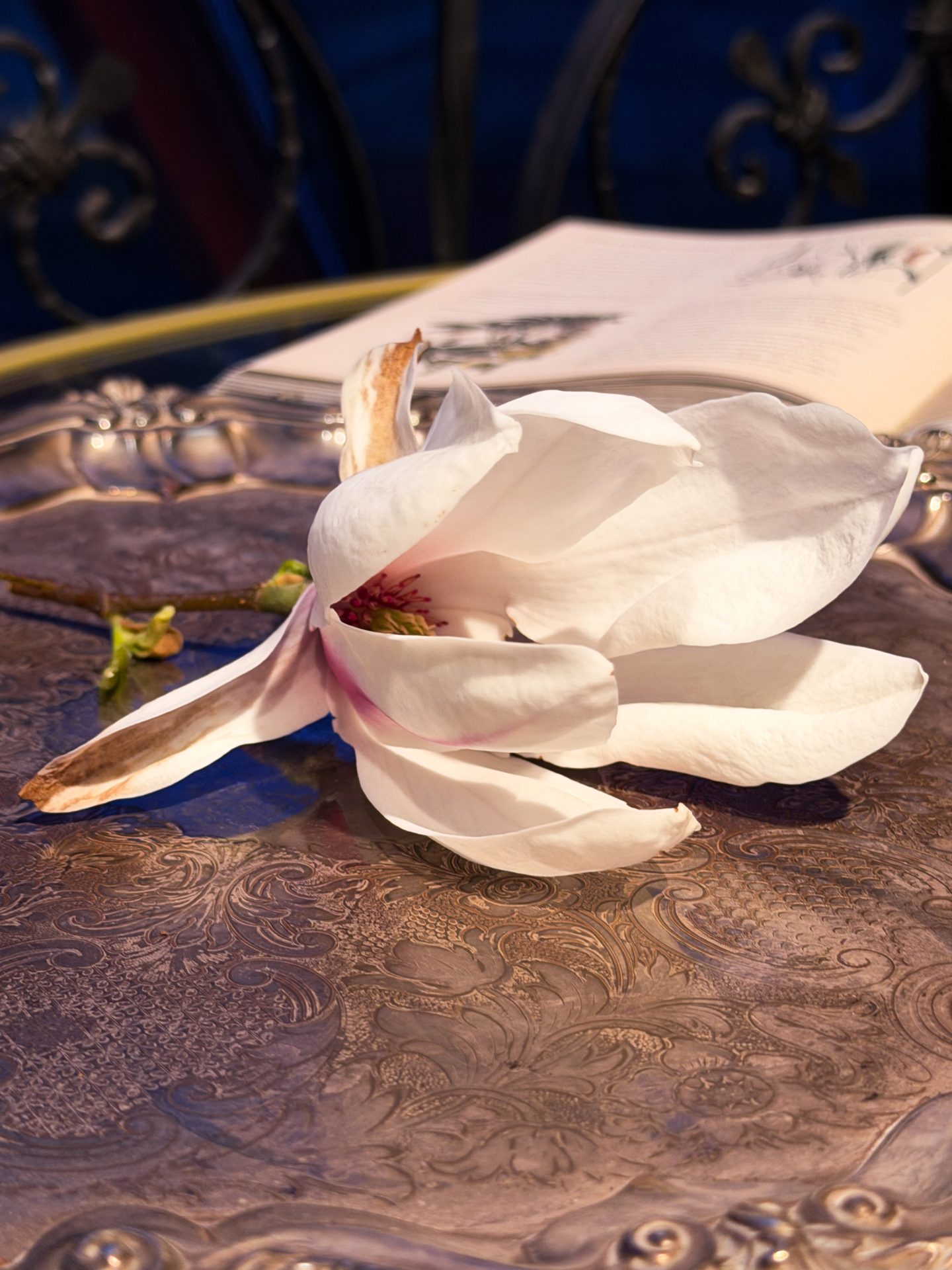
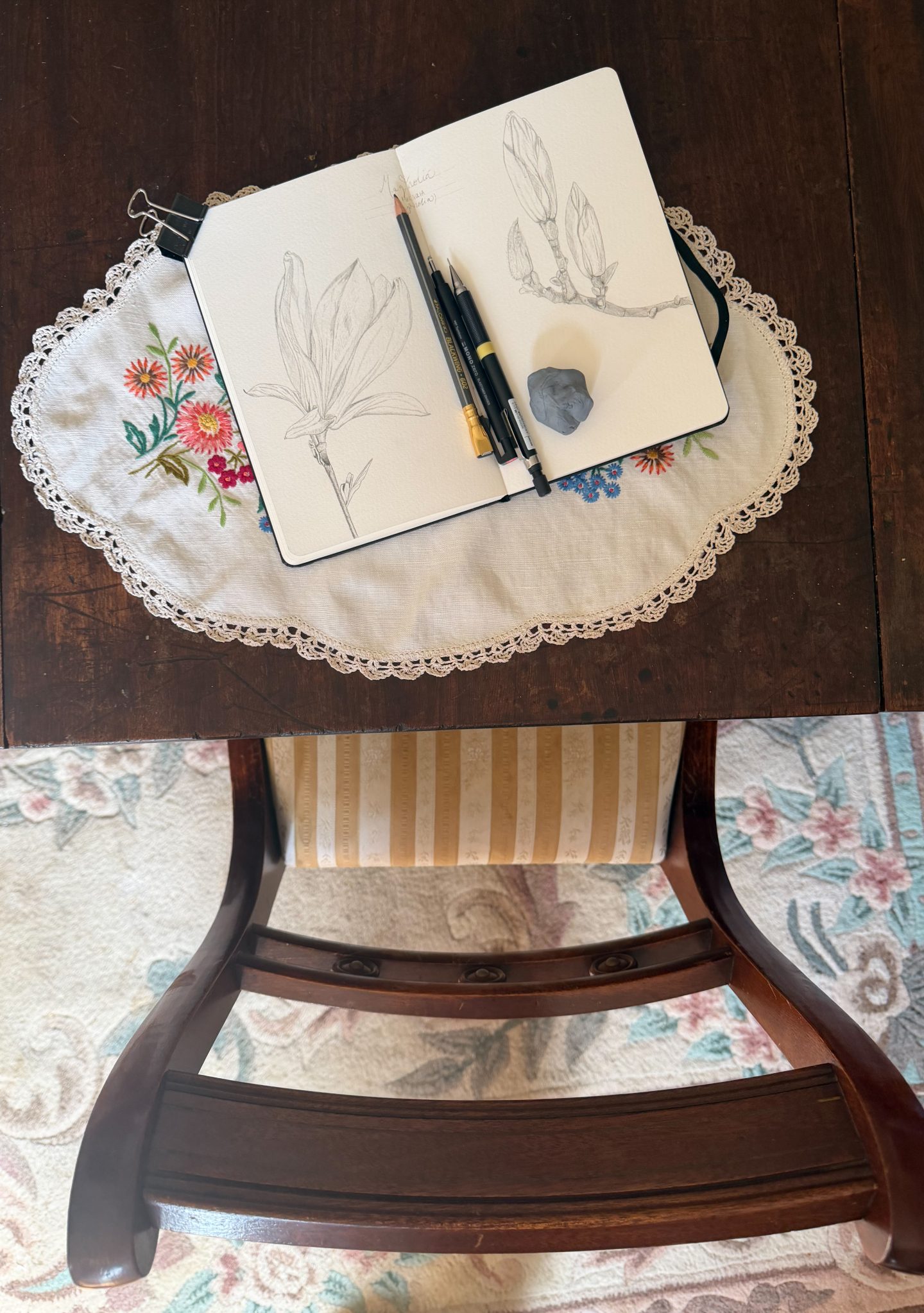
Magnolia (Magnolia × soulangeana)
Heavy blooms held briefly and almost precariously. Beautiful in a way that already feels temporary.
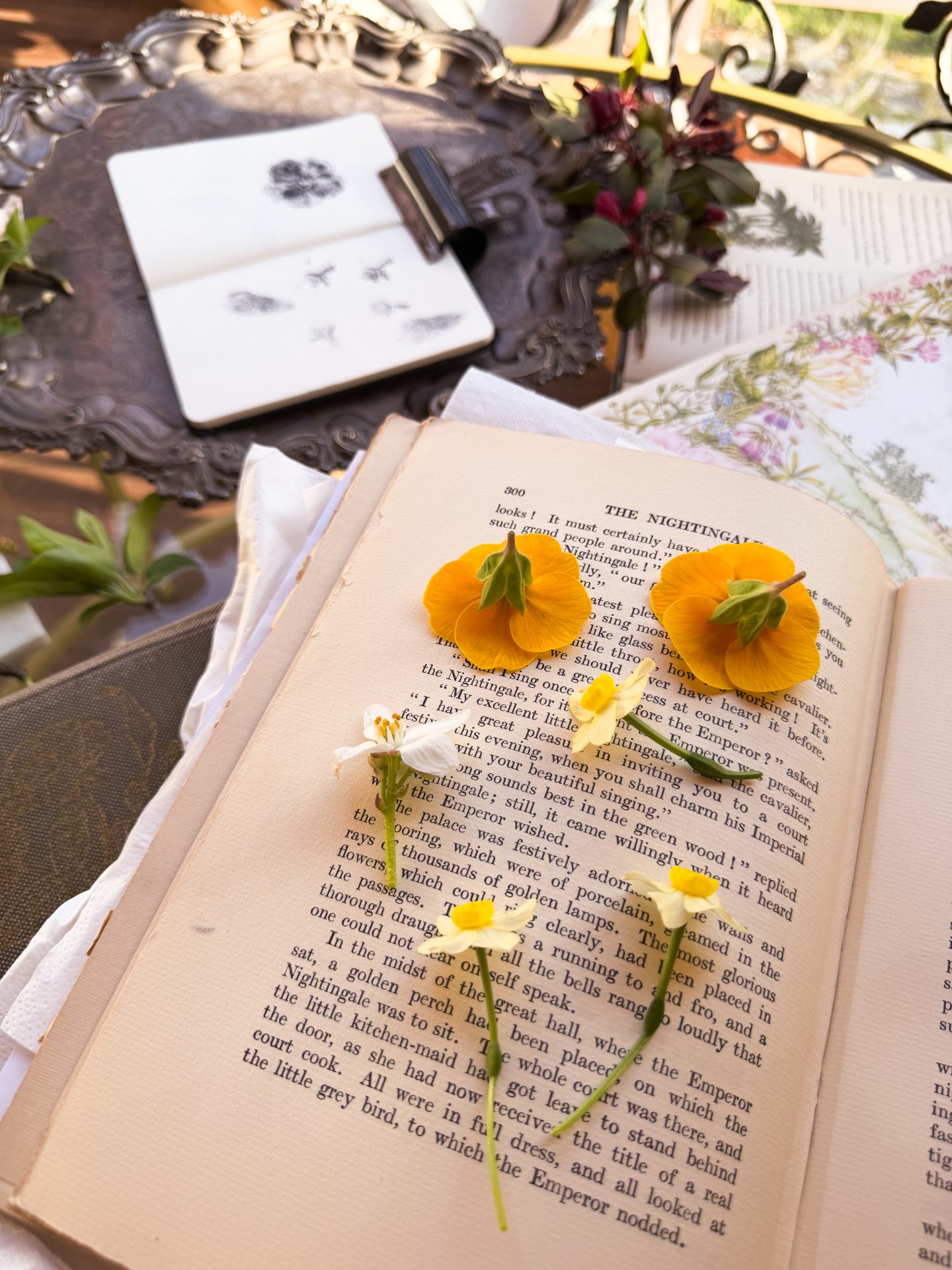
Primula (Primula vulgaris)
Clusters of soft yellow sitting low against banks and borders. One of the few flowers that still carries something of early spring in it.
Japanese honeysuckle (Lonicera japonica)
Beginning to climb again. Movement rather than structure.
Mexican orange blossom (Choisya ternata)
Dense with scent. Glossy leaves beneath star-like white flowers that feel almost excessive after winter restraint.
Discovery apple blossom (Malus domestica ‘Discovery’)
Pink edged blossom with a softness that shifts depending on light and weather.
Japanese crab apple (Malus floribunda)
Smaller blossom in larger quantities. Decorative without losing complexity.
Narcissus (Narcissus spp.)
Still holding on for the first part of April – lingering in pockets, though increasingly overtaken by later growth.
Bird cherry (Prunus padus)
Longer flower clusters, less rounded than ornamental cherries. Slightly wilder in appearance.
Barberry (Berberis darwinii)
Sharp structure beneath vivid orange-yellow flowers. Defensive and ornamental simultaneously.
English bluebell (Hyacinthoides non-scripta)
The month’s defining shift. Entire woodland floors transformed almost overnight.
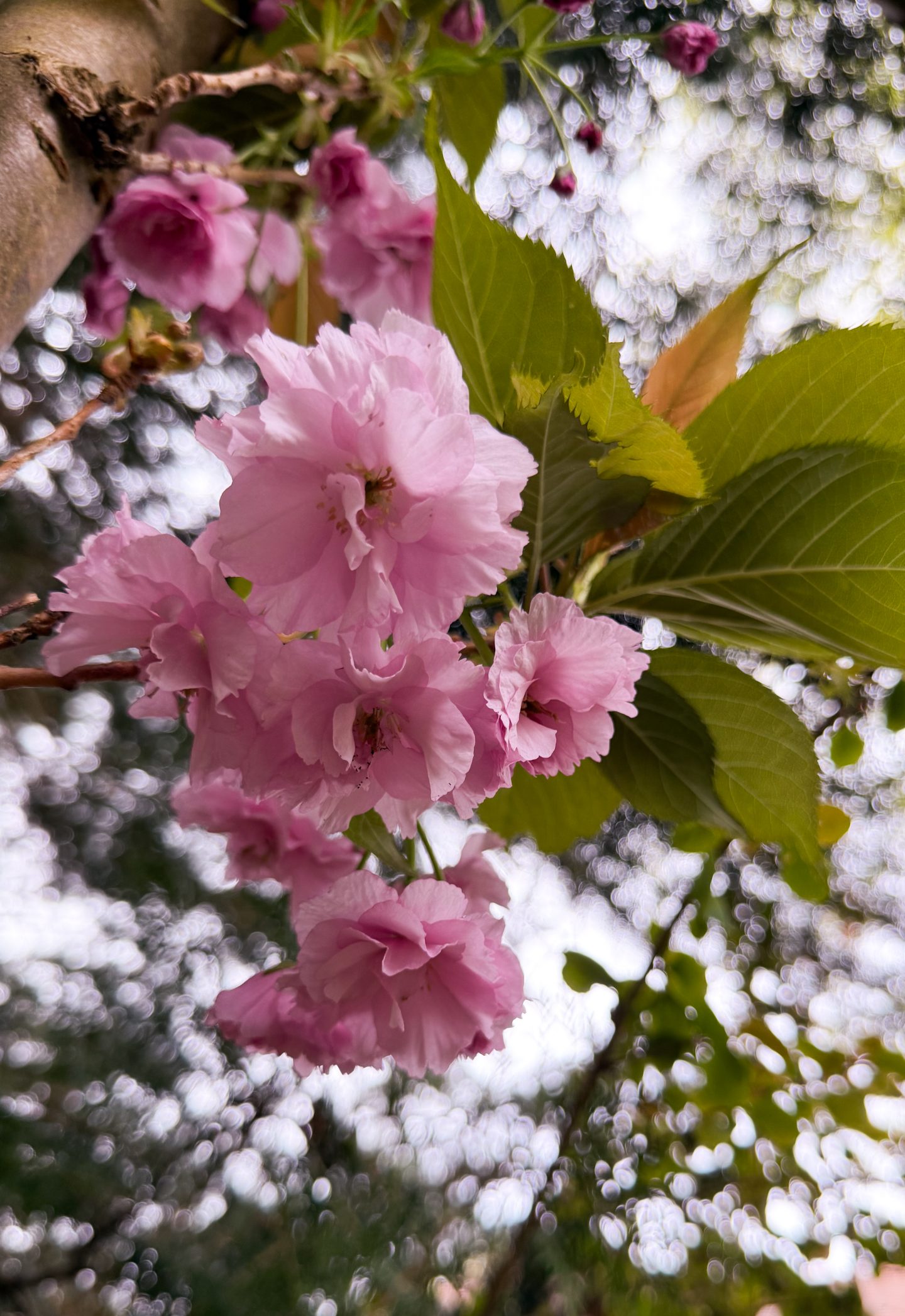
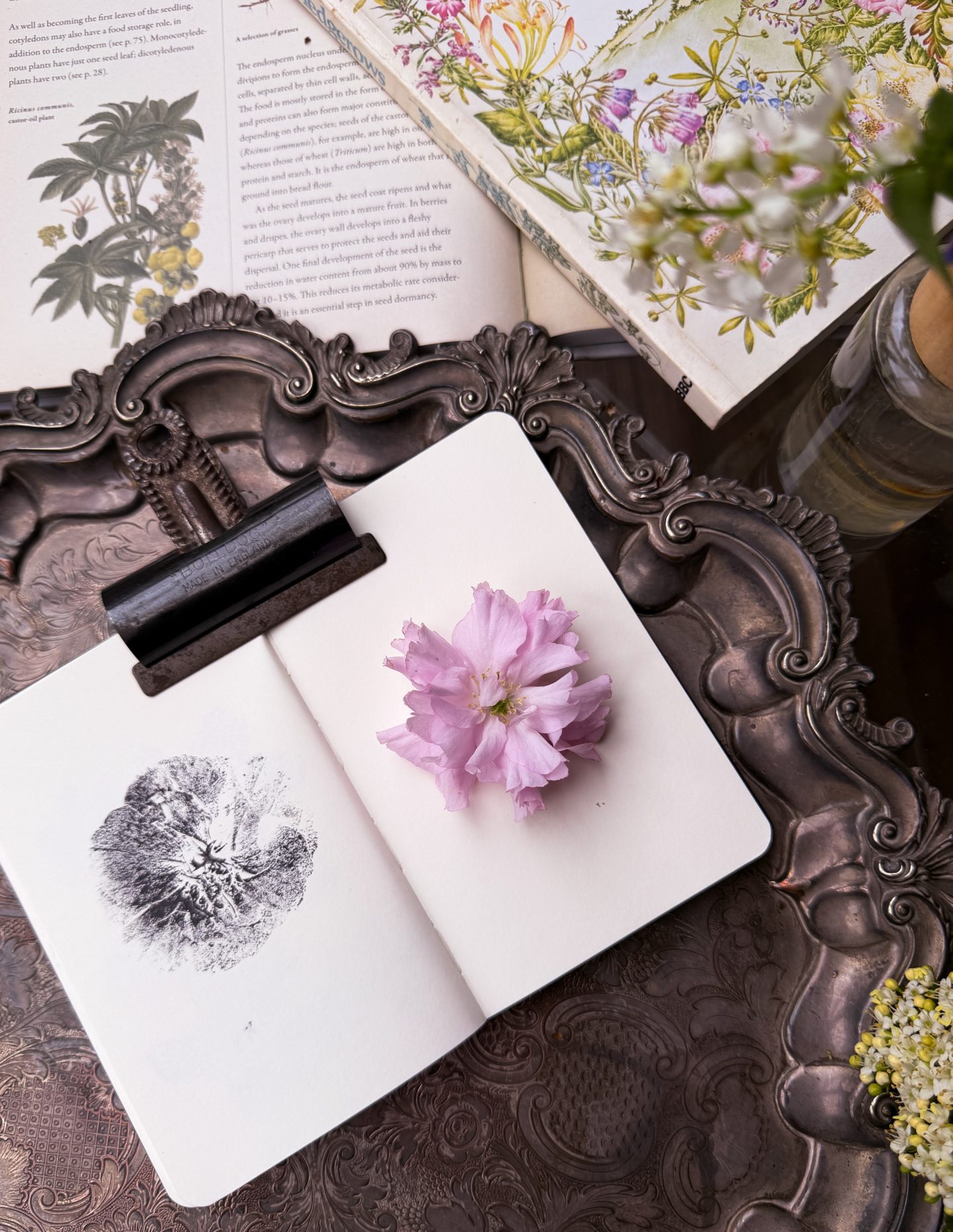
Japanese cherry (Prunus serrulata)
Ornamental blossom at full intensity. Impossible to ignore, even from distance.
Hawthorn (Crataegus monogyna)
A threshold plant. Once hawthorn flowers, spring feels irreversible.
Yellow archangel (Lamiastrum galeobdolon)
Spreading rapidly beneath shade and hedge cover. Bright yellow against deep green growth.
Ground ivy (Glechoma hederacea)
Low, creeping, persistent. Easily dismissed until viewed closely.
Garlic mustard / Poor man’s mustard (Alliaria petiolata)
Tallening now, preparing to flower fully. Functional, edible, historical.
[Photo 4: Woodland bluebells or hawthorn hedgerow.]
Canary flower (Tropaeolum peregrinum)
Unusual in structure, almost fragile-looking despite rapid growth habits.
Rose campion (Silene coronaria)
Silver foliage beneath vivid magenta bloom. High contrast against softer spring tones.
Mouse-ear chickweed (Cerastium fontanum)
Fine, low-growing, often dismissed as insignificant despite its detail.
Herb Robert (Geranium robertianum)
Pink flowers and red-tinged stems hidden among hedge growth. Distinctive once recognised.
Cat’s-eye speedwell (Veronica persica)
Tiny blue flowers carrying disproportionate visual impact against grass.
Cuckoo flower (Cardamine pratensis)
Pale lilac flowers appearing in damper ground as spring deepens fully.
Poppy (Papaver rhoeas)
Still sparse this early, but unmistakable when found.
Wood anemone (Anemone nemorosa)
Brief and delicate. One of the few flowers that already feels fleeting while blooming.
Buttercup (Ranunculus acris)
Glossy yellow surfaces reflecting light almost unnaturally brightly.
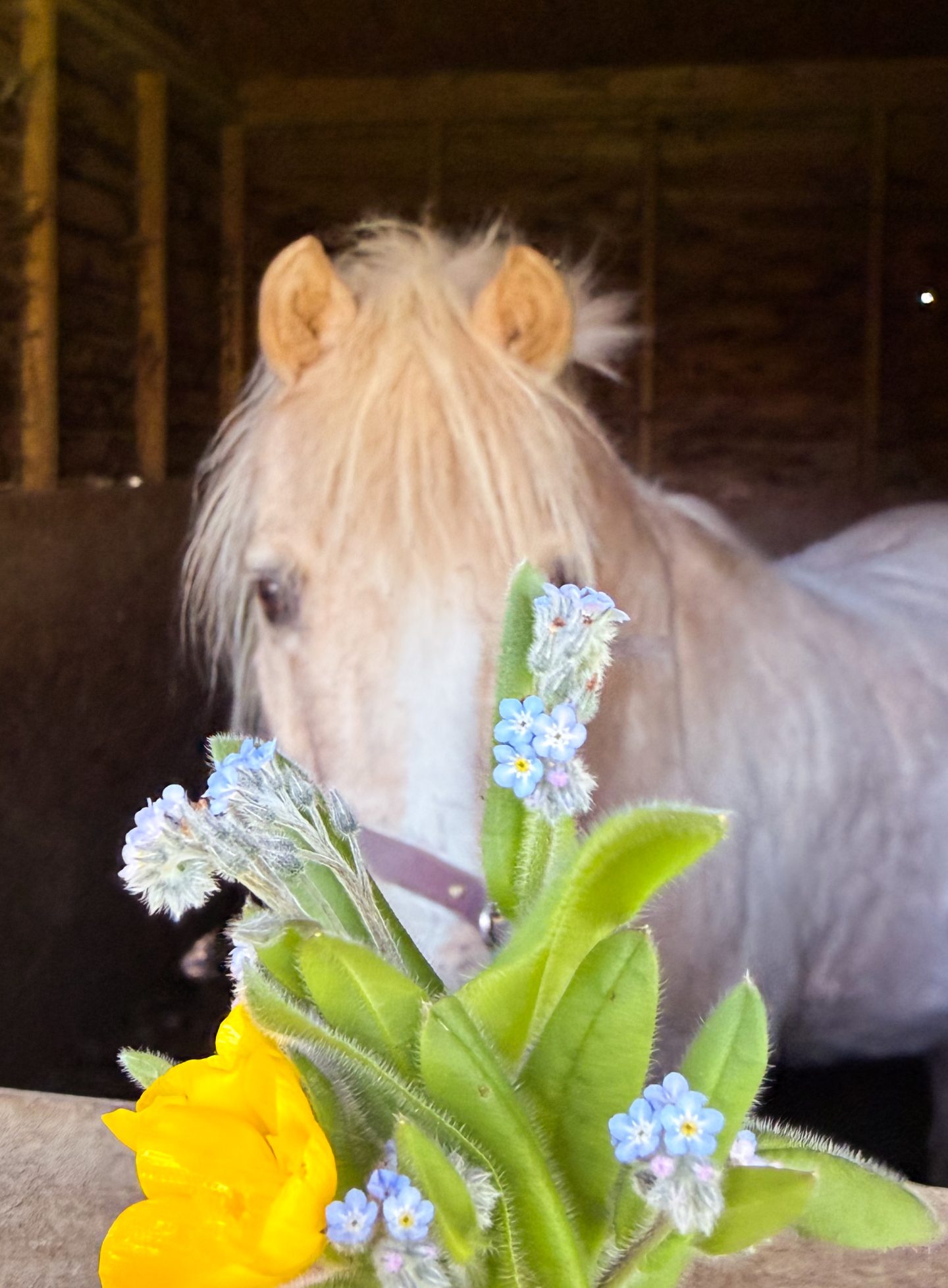
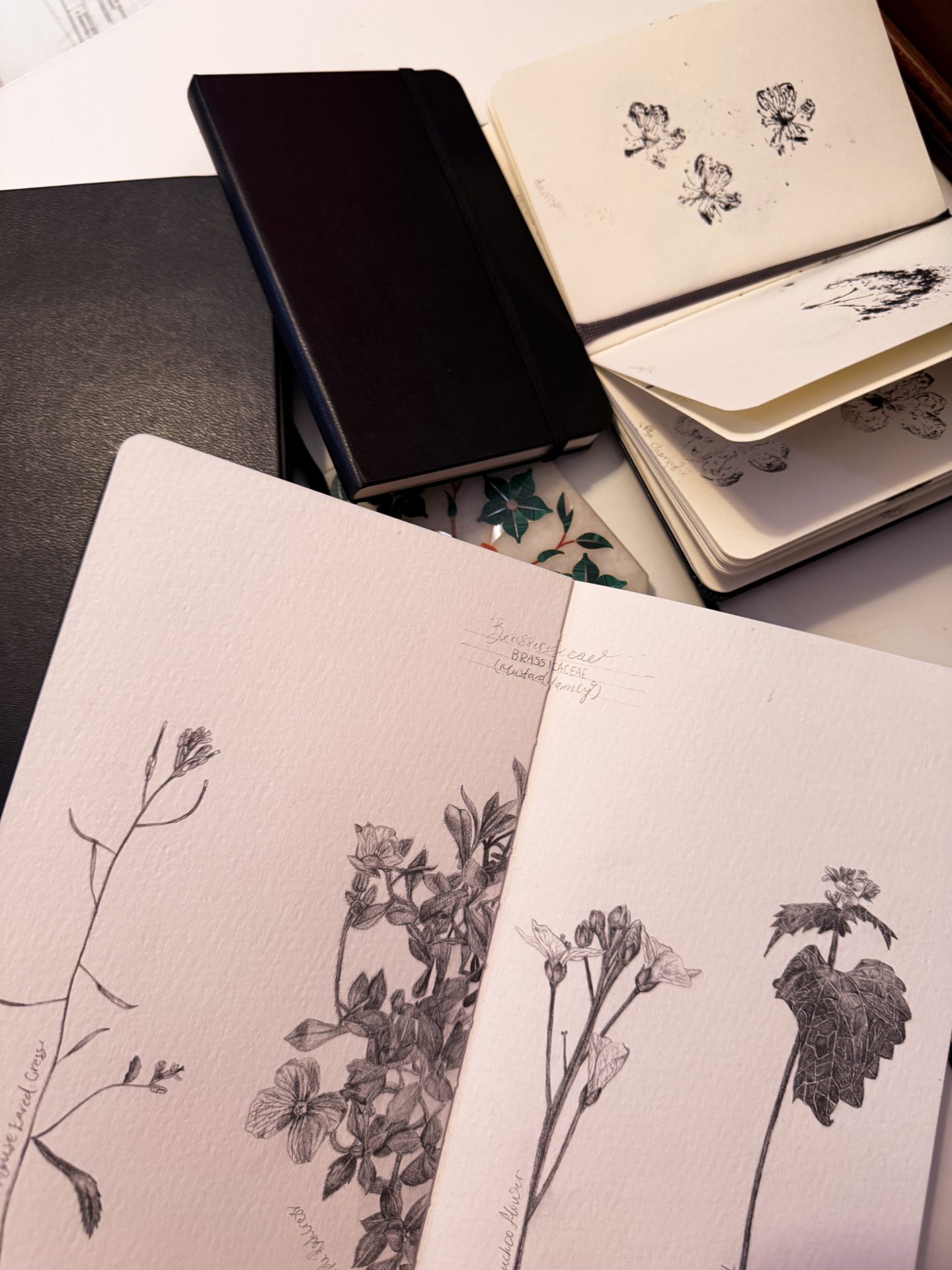

Forget-me-not (Myosotis sylvatica)
Small blue flowers carrying more emotional association than their size should allow.
Snowball flower (Viburnum opulus)
Rounded white clusters forming gradually, almost geometric in shape.
Rowan blossom (Sorbus aucuparia)
Foam-like clusters beginning to emerge above feathered leaves.
Lilac (Syringa vulgaris)
Dense scent before visual impact fully arrives.
Granny’s bonnet (Aquilegia vulgaris)
Strange, almost improbable flower forms. More intricate the longer they are observed.
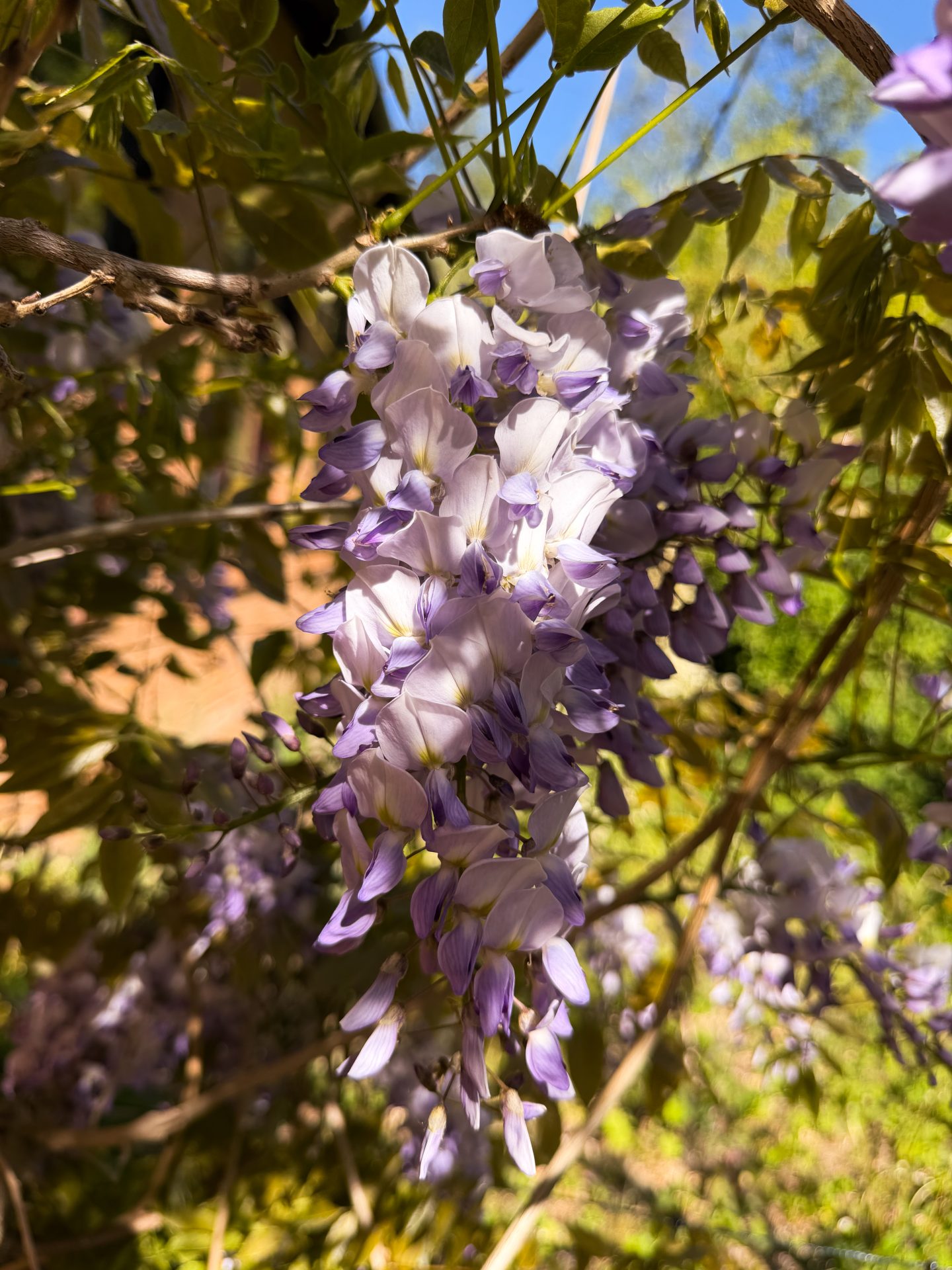
Wisteria (Wisteria sinensis)
Not blooming quietly but cascading. One of the few plants that alters entire structures around it.
Chickweed (Stellaria media)
Constantly returning. Small, soft, persistent.
Milkweed (Asclepias syriaca)
Early growth emerging with heavier structure than most spring plants surrounding it.
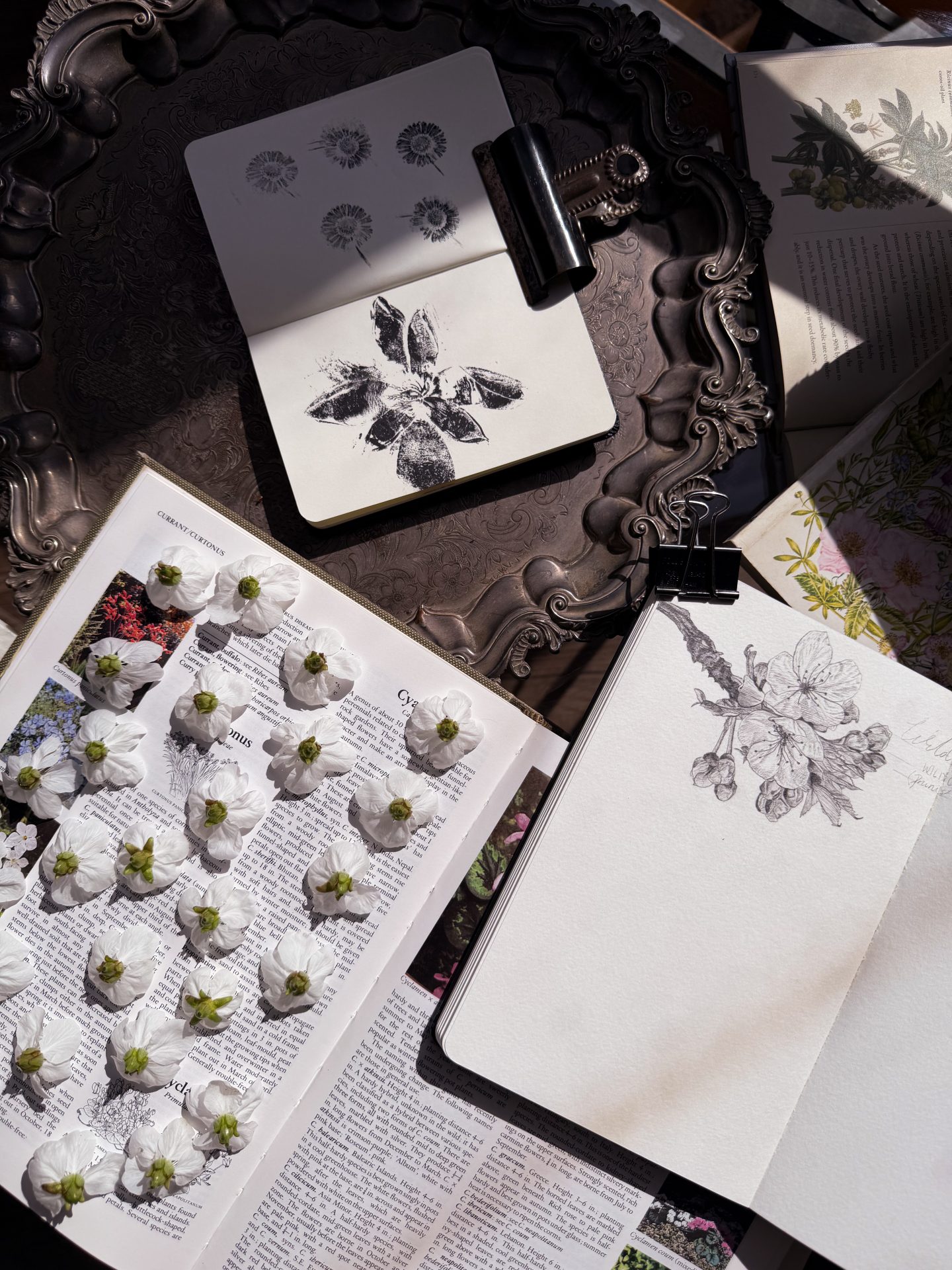
By April, the notebook changes again.
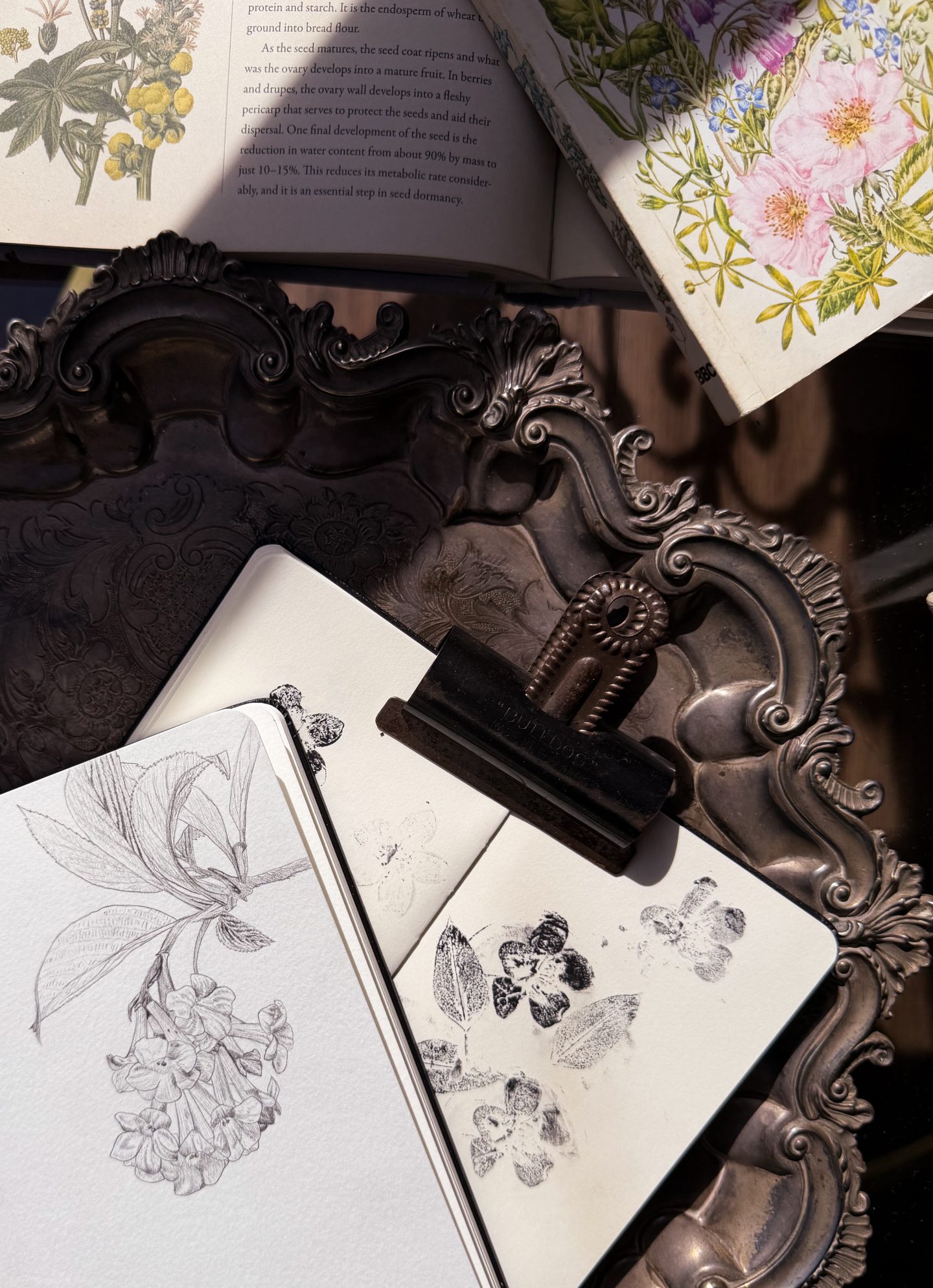
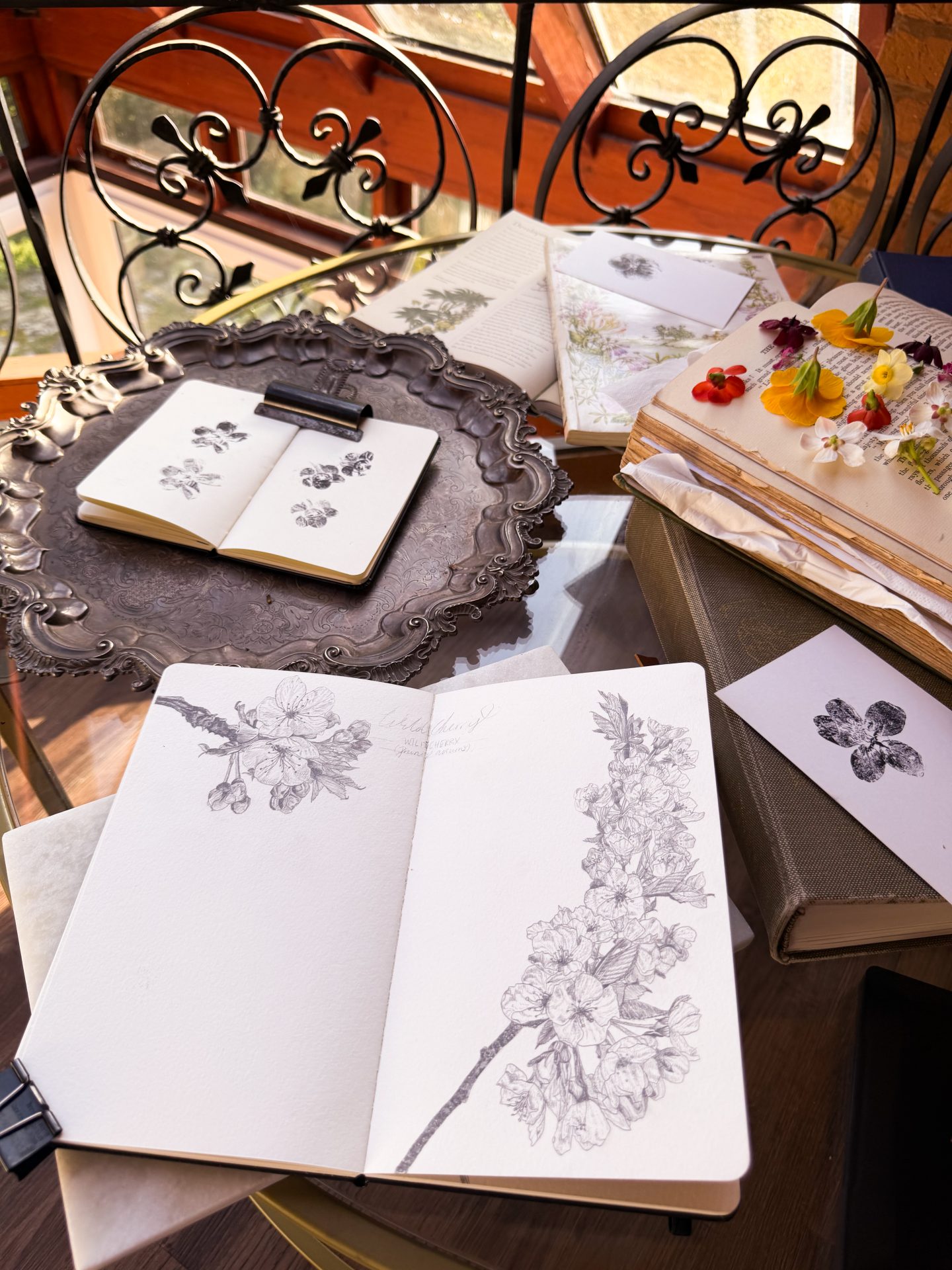
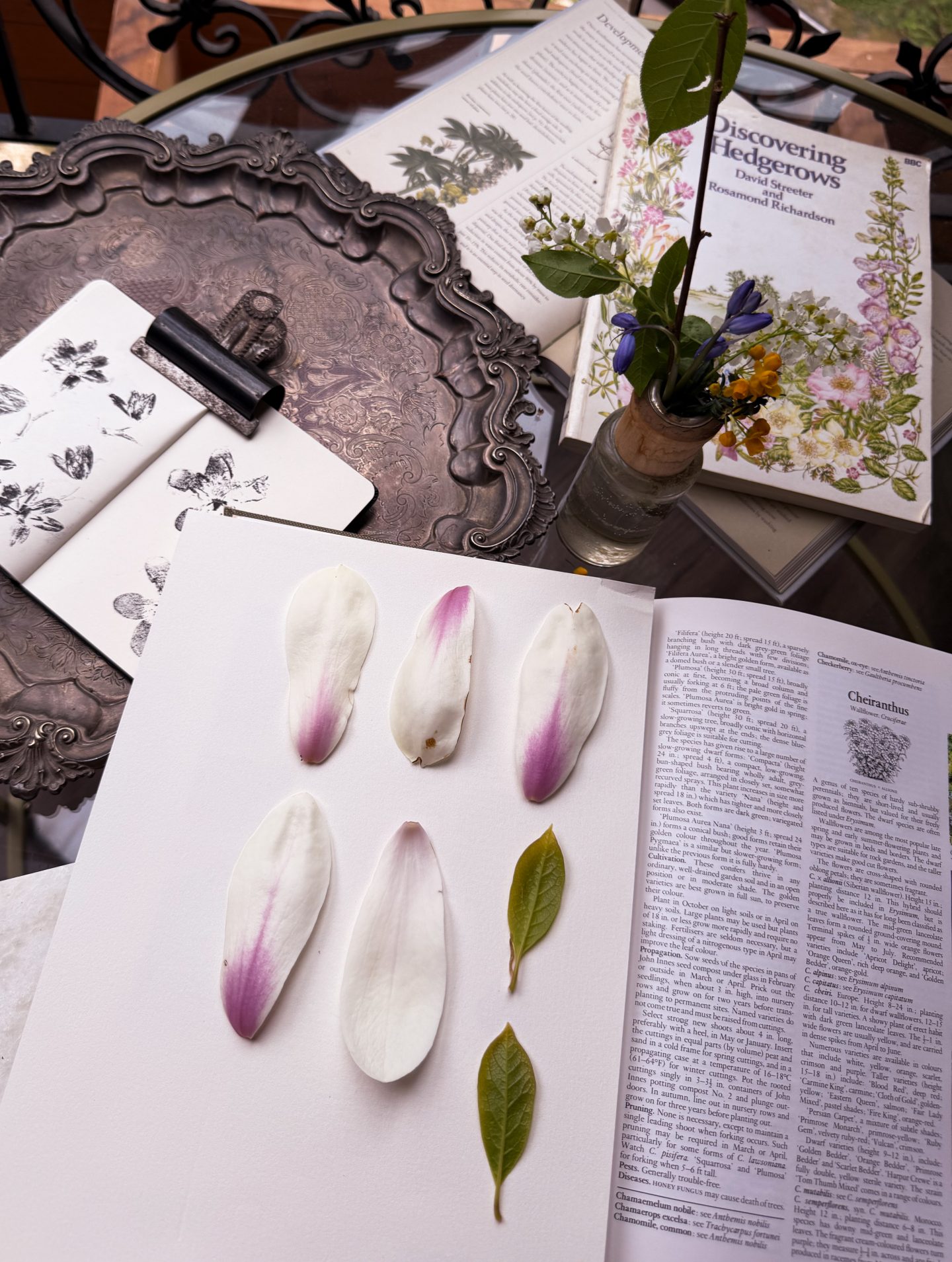
Not because the process becomes careless, but because perfection becomes impossible. There are too many specimens arriving simultaneously to grant each the same isolated attention winter allowed.
The archive becomes denser.
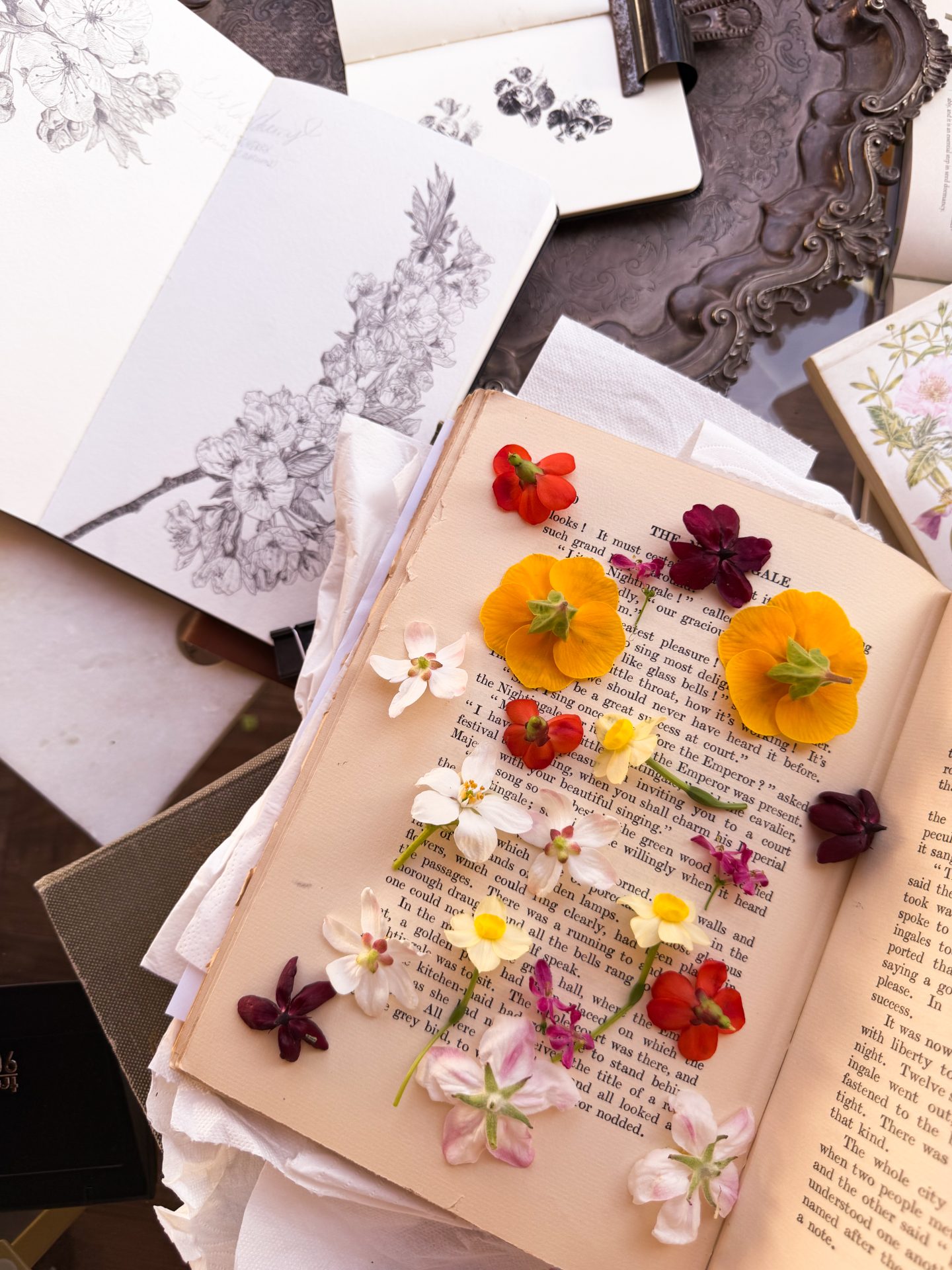
Pages hold multiple studies at once. Pressing accelerates. Identification takes longer. Observation sharpens out of necessity rather than patience.
The challenge is no longer finding growth.
It is deciding what can realistically be preserved before the next wave arrives.
Ink continues to function as evidence rather than interpretation. Pressed specimens continue to flatten time into something tangible. But April introduces excess into the process. The land no longer waits for documentation to catch up.
And perhaps that is the point.
January asked whether anything would emerge at all.
April answers with everything at once.
Scarcity created focus.
Abundance creates pressure.
The archive holds both.
Follow along with this project here – A Year in Ink – A Botanical Archive.
