
This drawing is based on Michelangelo’s Pietà, a sculpture that occupies a very different emotional register to Bernini’s theatrical intensity. Where The Ecstasy of Saint Teresa is about transcendence through surrender, the Pietà is about stillness after devastation.
It is not dramatic. It does not move.
It settles.
And that quietness is what makes it difficult to sit with.
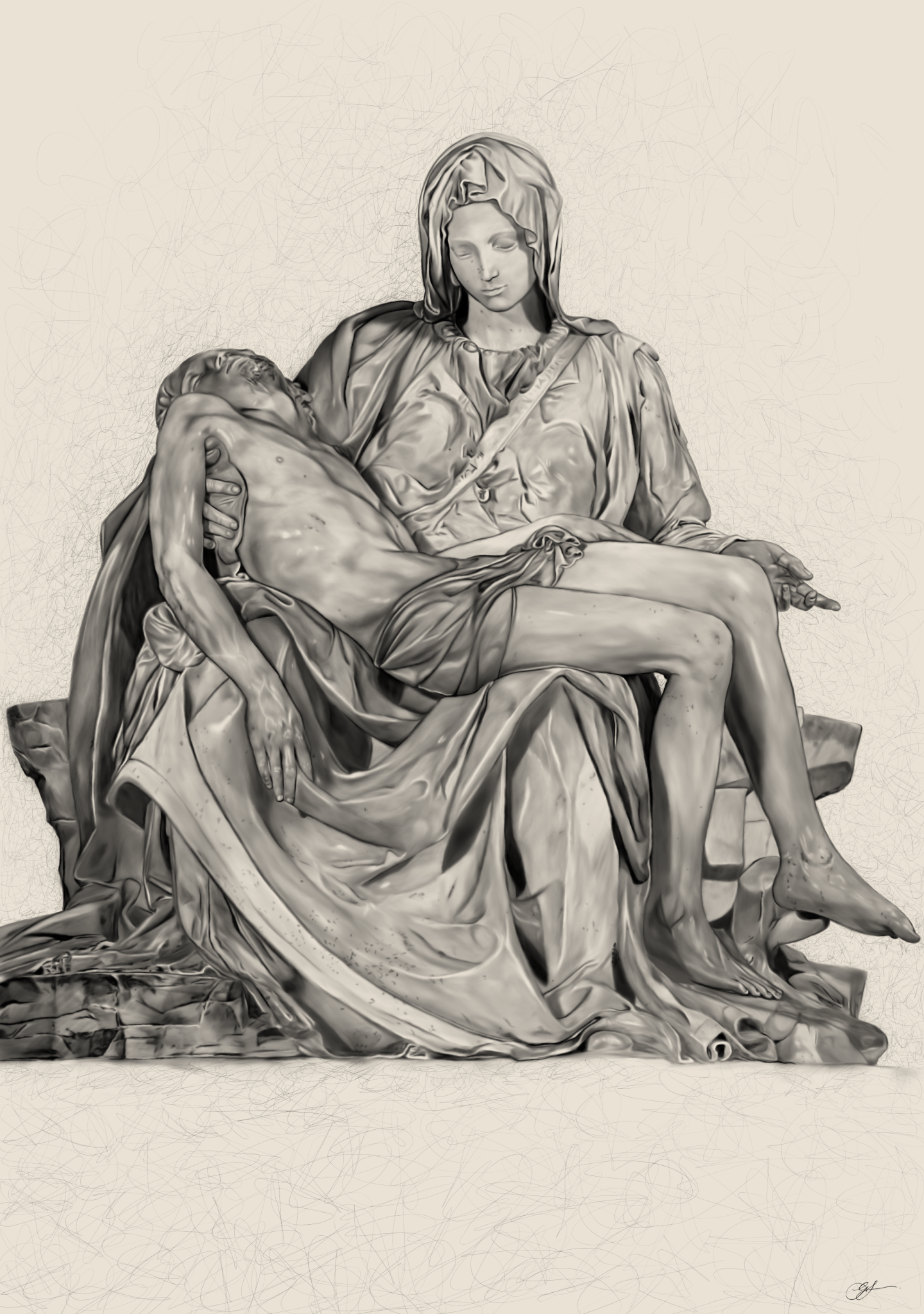
Studying Michelangelo’s Pietà
Michelangelo completed the Pietà in 1499, and it now rests inside St. Peter’s Basilica. The sculpture depicts the Virgin Mary holding the body of Christ after the crucifixion. Unlike later interpretations of this subject, Michelangelo’s version is composed, almost restrained.
There is no overt agony carved into the marble. Christ’s body is slack but not contorted. Mary does not collapse under him. She does not scream. Her face is controlled, inward.
The composition is pyramidal, stable. It feels architecturally resolved. That structural calm creates a powerful contrast with the subject matter. Death is present, but chaos is not.
What struck me most when studying it was the intentional imbalance of scale. Mary is proportionally larger than Christ. It allows her to hold him without strain. It also shifts the meaning of the scene. This is not purely anatomical realism. It is symbolic design.
Michelangelo prioritises spiritual clarity over literal proportion.
The Body After Violence
While Bernini sculpts the moment of piercing, Michelangelo sculpts what comes after. The violence has already occurred. What remains is weight.
Drawing Christ’s arm was central to understanding the piece. The hand falls open, fingers relaxed in death. There is no tension left in the musculature. The torso is softly defined, almost serene. The wounds are present but understated.
Mary’s left hand extends outward, palm open. It is a subtle but deliberate gesture. Not gripping. Not clinging. Almost presenting.
There is an emotional intelligence in that choice. The grief is not theatrical. It is absorbed.
When drawing this sculpture, I focused on restraint. On resisting the urge to exaggerate shadow or deepen expression. The power of the Pietà lies in what it withholds.
Close-Up Details

Her expression was the most challenging element. It is youthful, composed, and distant without feeling detached. There is sorrow there, but it is internalised.
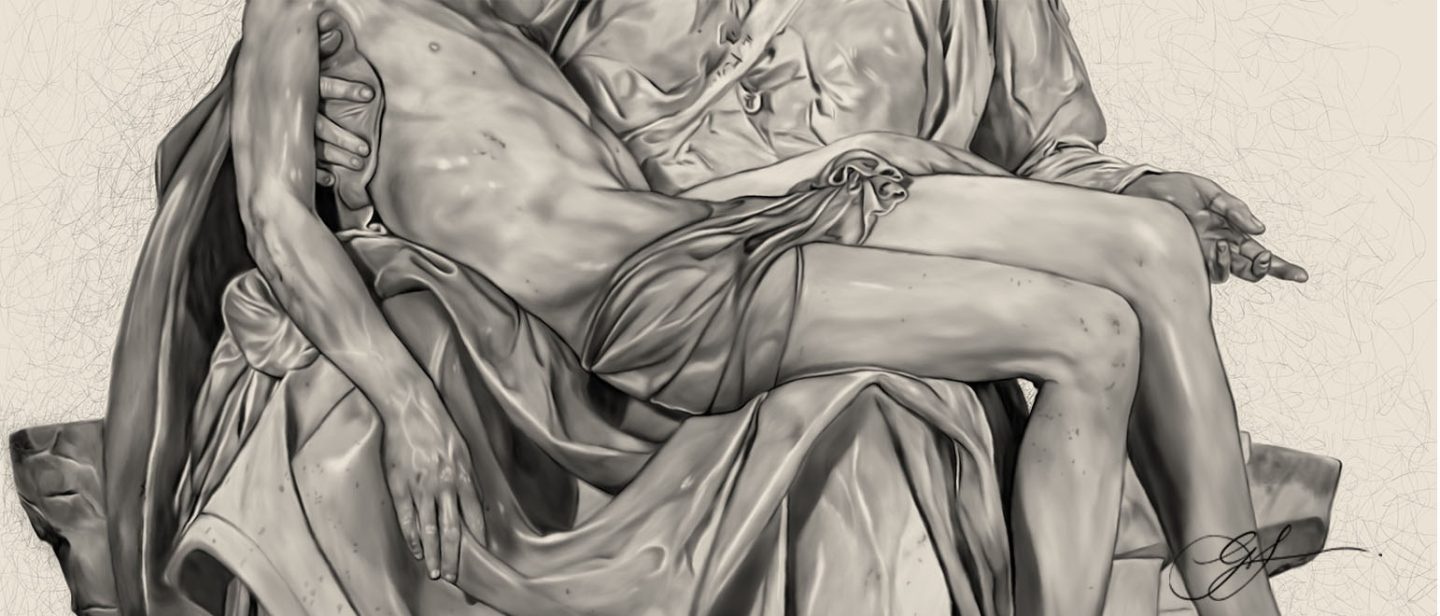
The softness in the anatomy contrasts with the weight implied by gravity. The open hand carries a quiet finality.
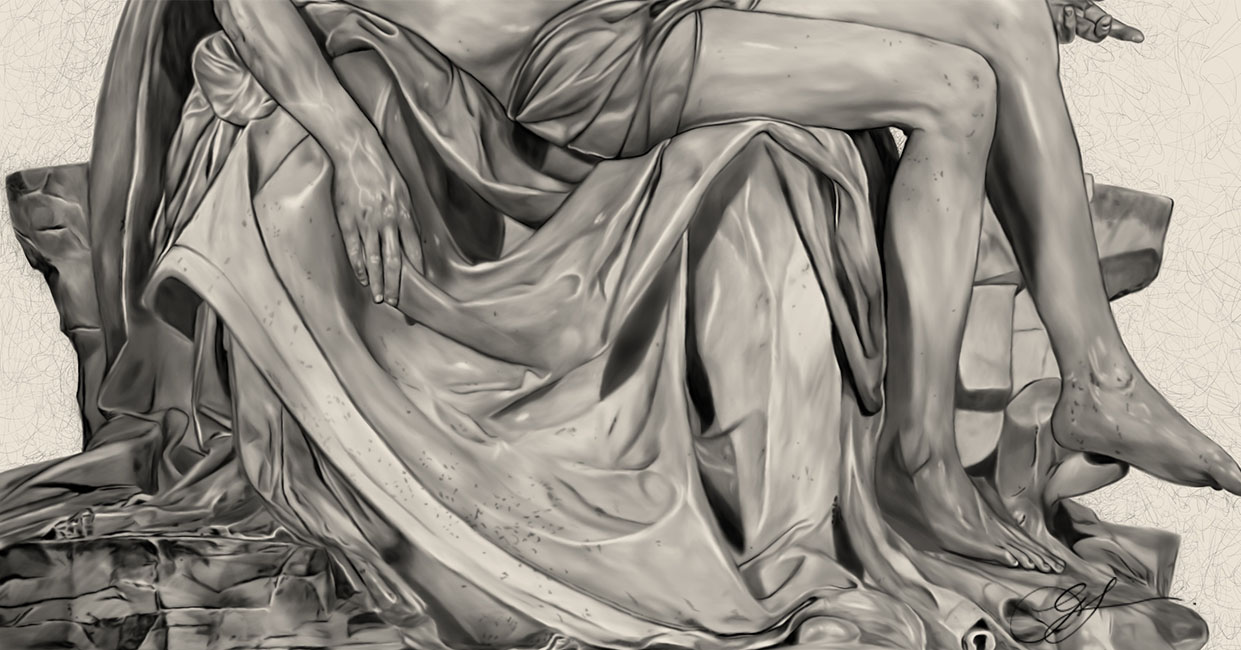
Michelangelo’s handling of fabric is structural, not decorative. The folds are deep and deliberate, creating both visual mass and emotional containment. Drawing the drapery required patience. It anchors the entire composition.
Drawing Renaissance Sculpture Without Sentimentality
The Pietà is often approached through theology, but what makes it enduring is its humanity. It is a mother holding her dead child. That is universally understood.
There is a discipline to Michelangelo’s carving that I find compelling as an artist. Nothing is excessive. Nothing pleads for attention. The marble is polished to a softness that feels almost like skin, yet the emotional tone remains controlled.
Drawing from it requires slowing down and resisting embellishment. The sculpture does not need drama added to it. It is already complete.
In this study, I wasn’t interested in amplifying grief. I was interested in observing how grief can exist without spectacle.
The Classical Statue Drawing Collection
This piece sits within my ongoing series of classical sculpture drawings. Each work in the collection explores a figure whose body carries emotional weight rather than idealised perfection.
If Bernini’s Teresa embodies surrender to spiritual intensity, Michelangelo’s Mary embodies endurance. Both are bodies shaped by experience. Both exist at a threshold.
The full statue drawing collection will be available soon as high-quality prints. More works from the series will be shared as it develops.
Some sculptures command attention through movement. Others through silence.
The Pietà belongs to the latter.
This drawing is my way of staying with that stillness long enough to understand it.
